Road Signs
Alabama Road Signs Practice Test 2026 | Free + Full Guide
Alabama DMV Permit Test, Road Signs Guide
This Alabama road sign guide covers all 4 categories you need to know, regulatory, warning, guide, and work zone signs, with explanations for each.
Guide Signs
Alabama guide road signs for the DMV permit test.
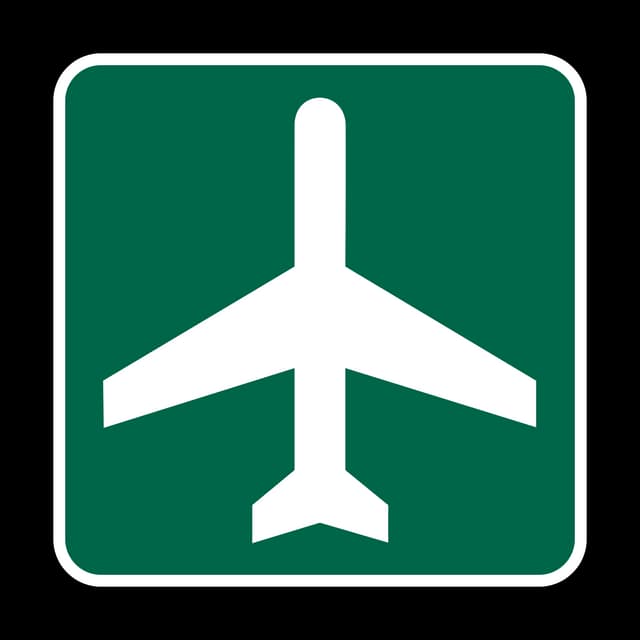
Indicates the direction to a nearby airport or airfield so drivers can follow the route to passenger or cargo terminals.
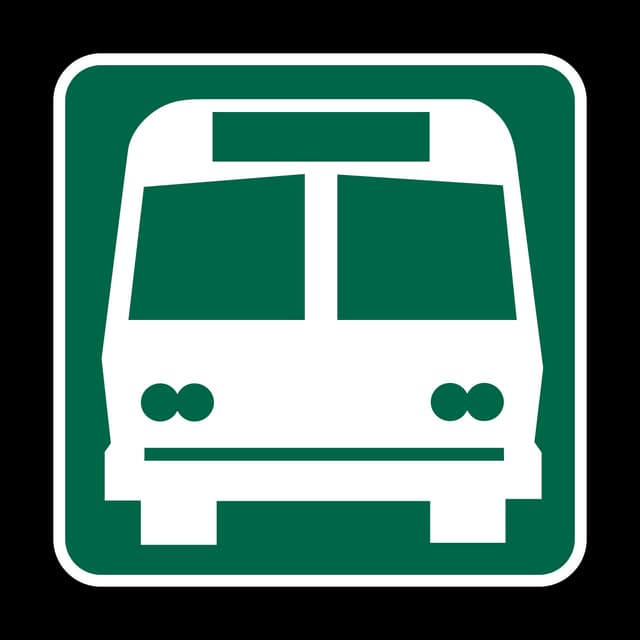
Marks the location or direction of a bus terminal or major bus stop where passengers can board or transfer.
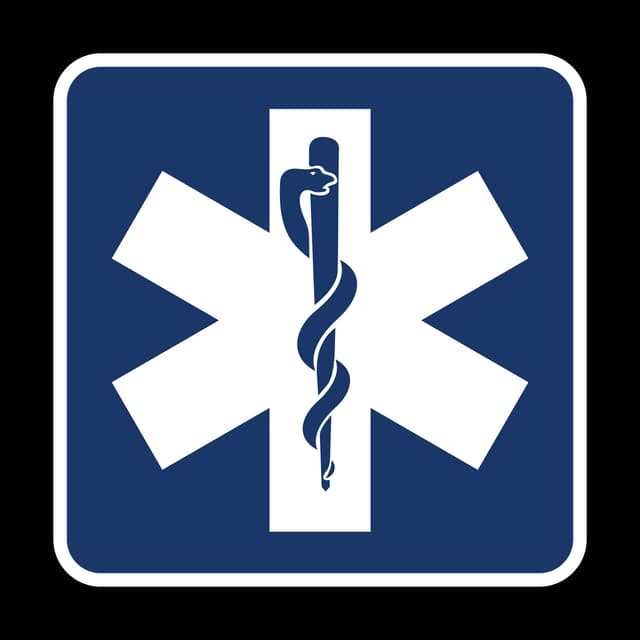
Points to facilities that provide emergency medical care, such as urgent care or EMS stations.
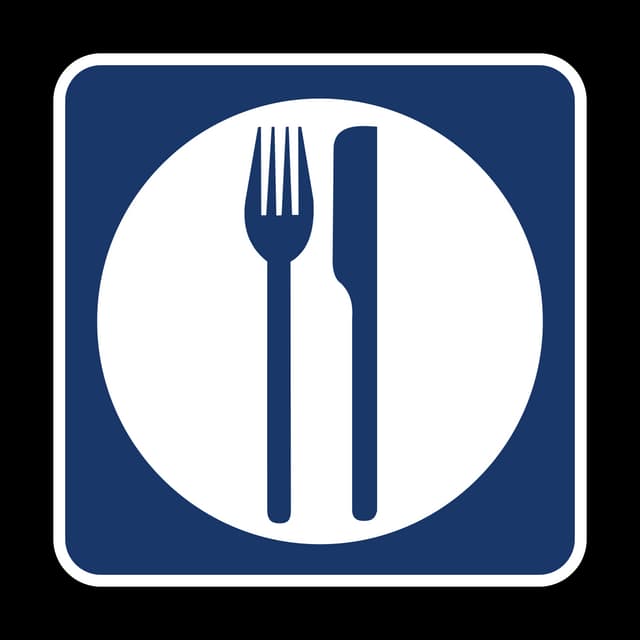
Shows that restaurants or food services are available at or near the upcoming exit or roadside area.
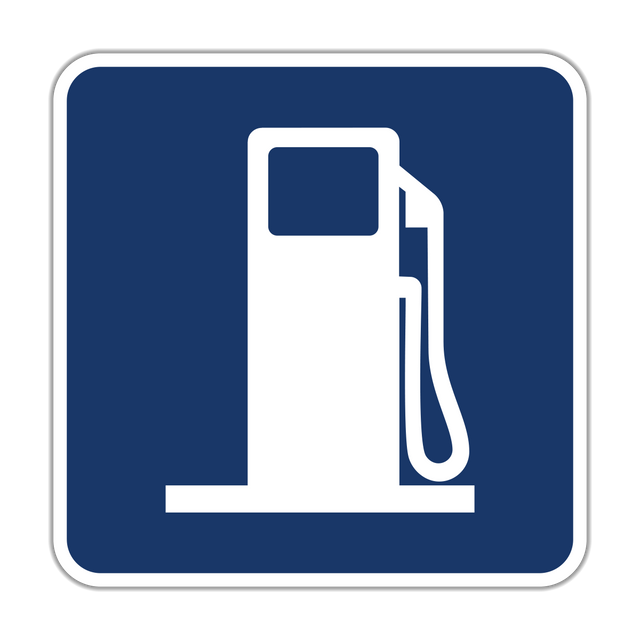
Identifies nearby gas or service stations where drivers can refuel their vehicles.
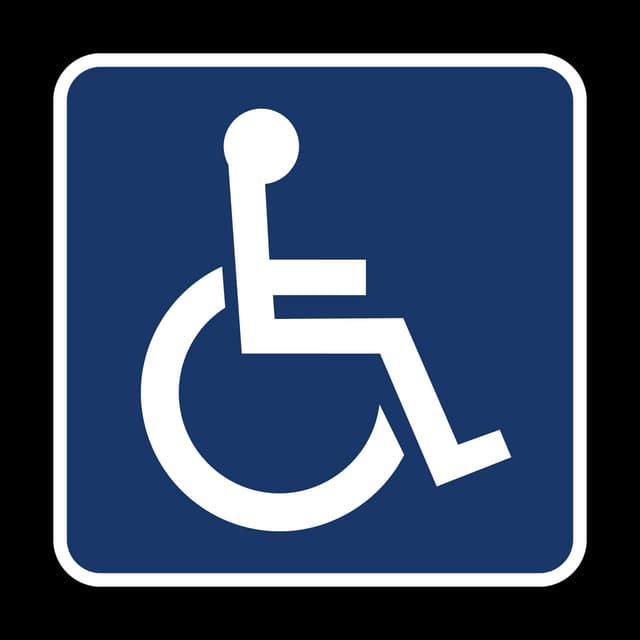
Indicates accessible facilities, parking, or services for drivers and passengers with disabilities.
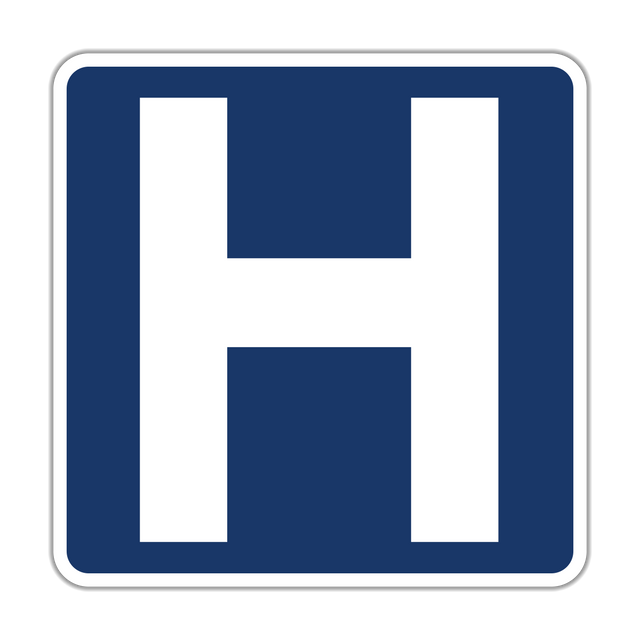
Directs drivers to the nearest hospital or major medical center for treatment and emergencies.
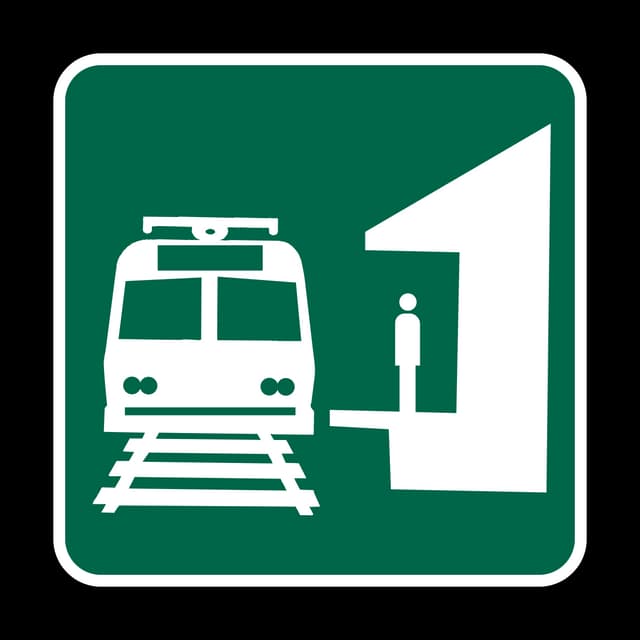
Marks the direction or location of a light rail or transit station for park-and-ride or transfers.
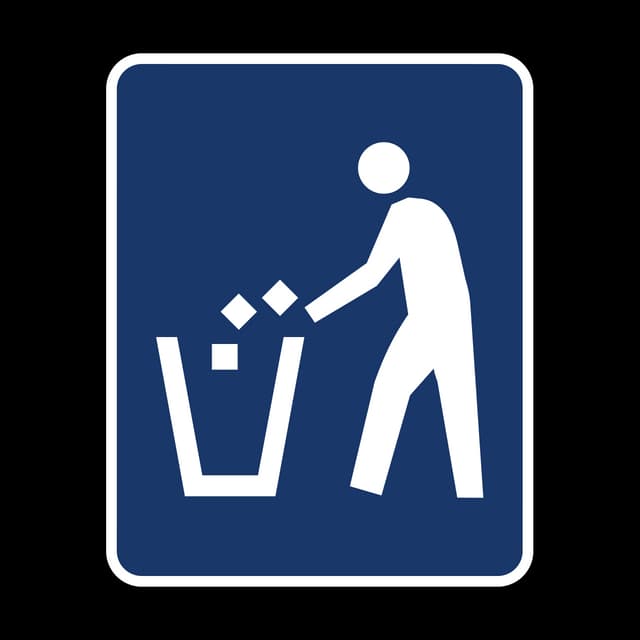
Shows where roadside trash or recycling containers are provided for proper waste disposal.
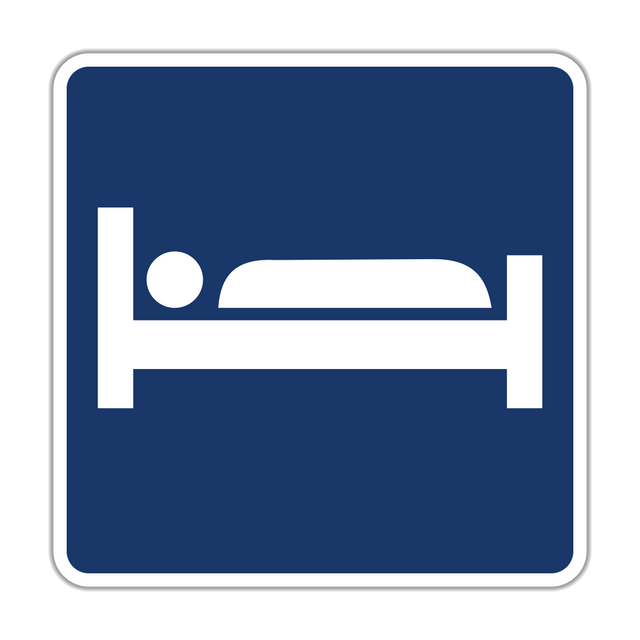
Alerts drivers to nearby hotels, motels, or other lodging options accessible from the route.
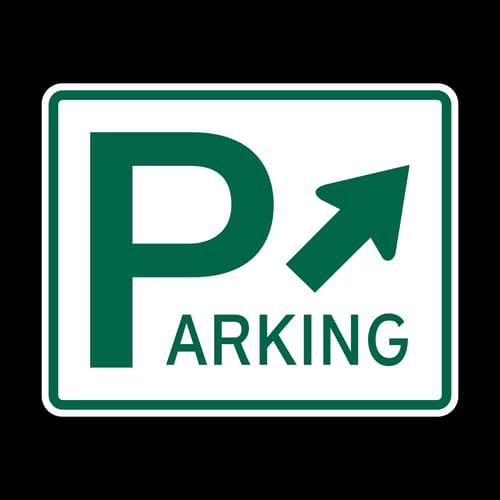
Indicates a designated public parking area or rest area where vehicles may be parked.
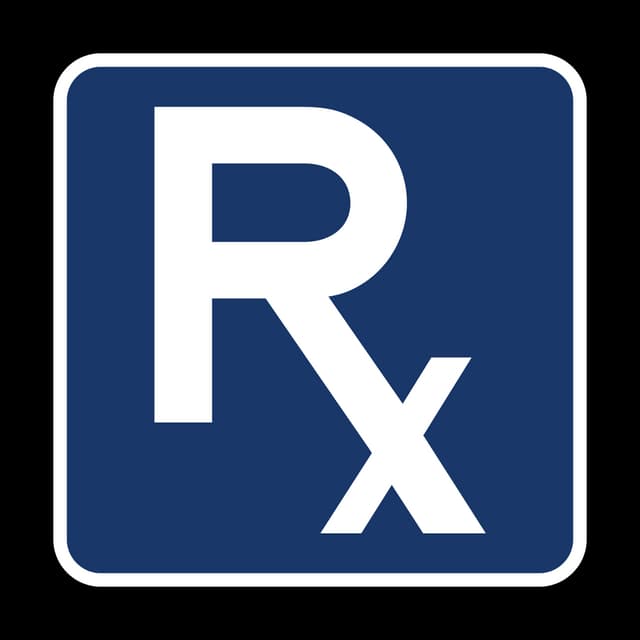
Directs to a nearby pharmacy or drugstore where medications and health products are available.
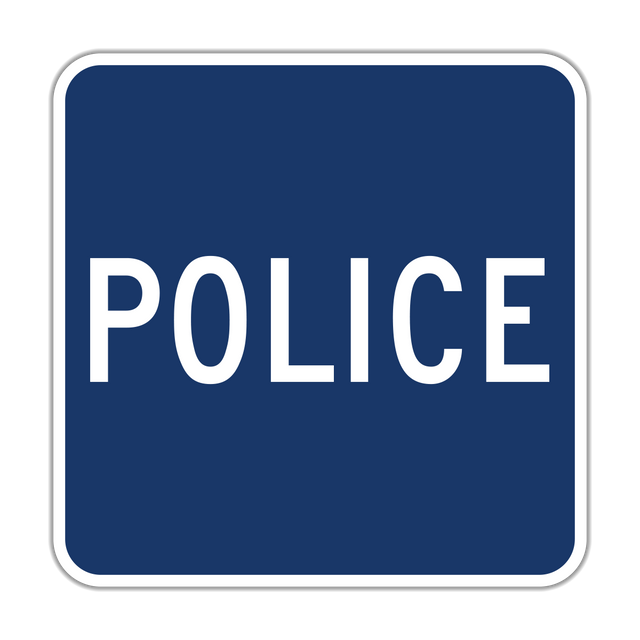
Identifies the location of a police station or law enforcement services for assistance and reporting.
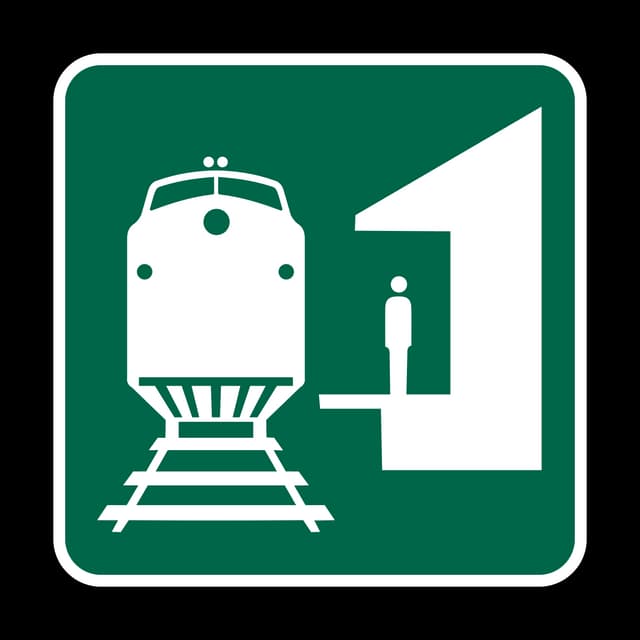
Shows the direction or location of a passenger rail station for boarding trains or making connections.
Regulatory Signs
Alabama regulatory road signs you must know for the permit test.
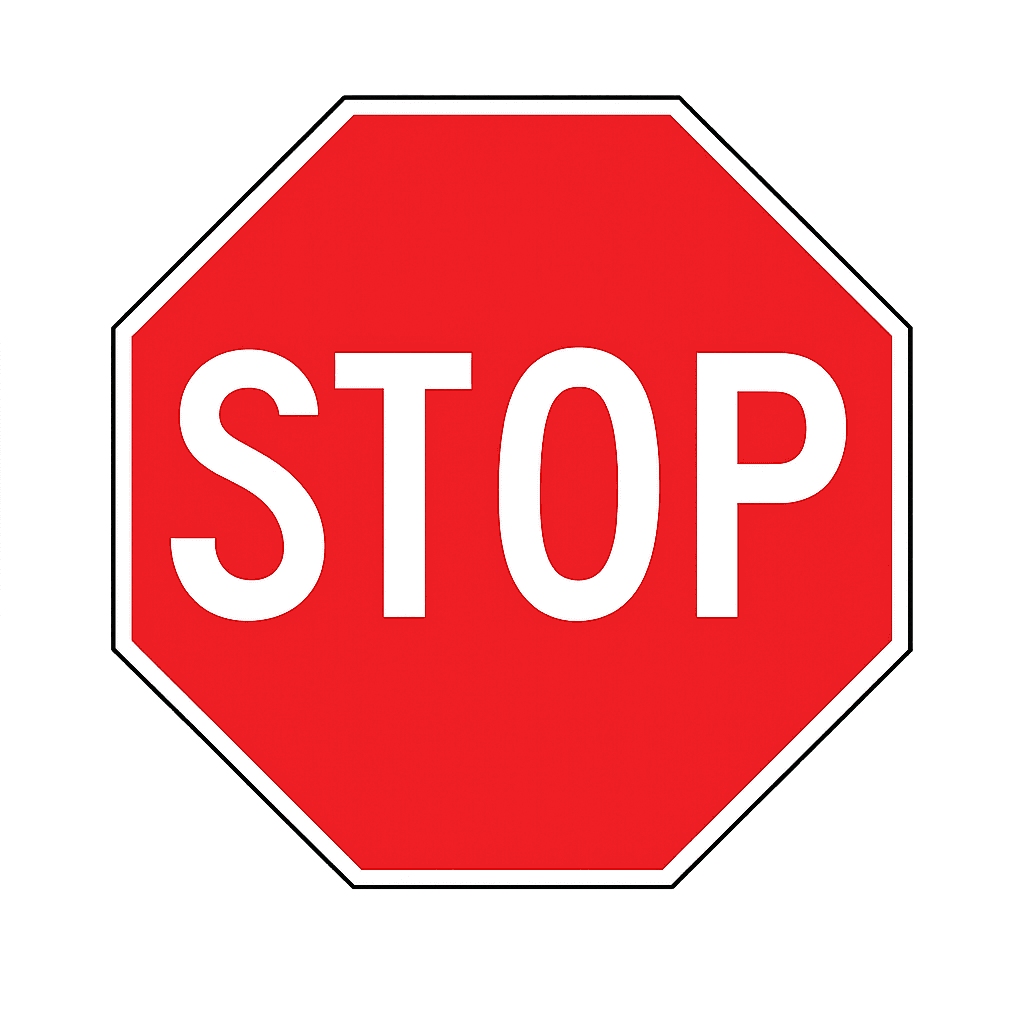
Stop regulatory sign telling drivers what is required or prohibited at this location. Obey to avoid violations.
Most commonly tested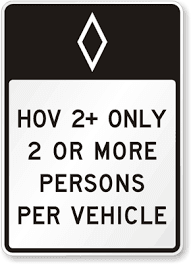
Warns that a lane ahead is reserved for certain vehicles, such as carpools, buses, or bikes, during specific times or at all times.
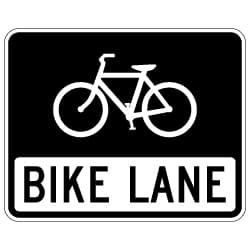
Marks a lane reserved for bicycles; motor vehicles should not use this lane except when turning or crossing it.
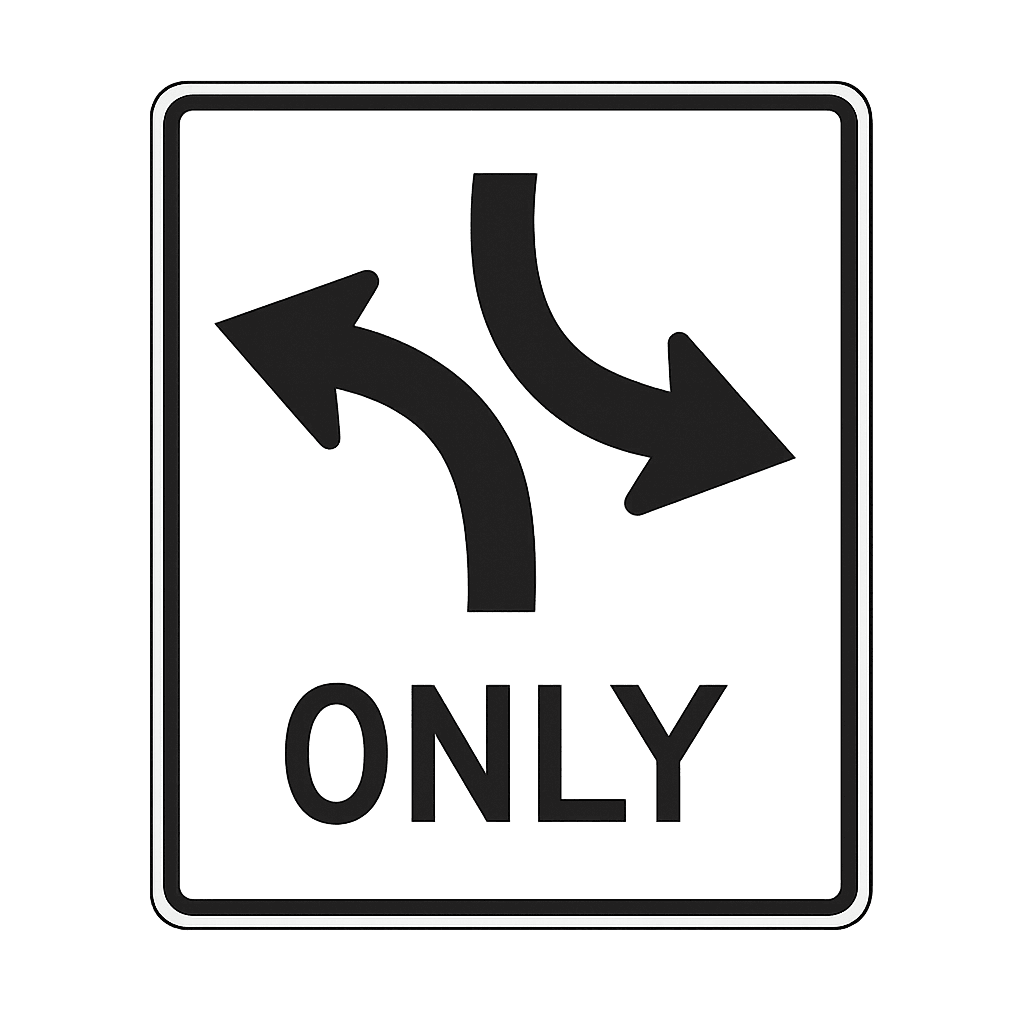
Two Way Left Turn Only regulatory sign telling drivers what is required or prohibited at this location. Obey to avoid violations.
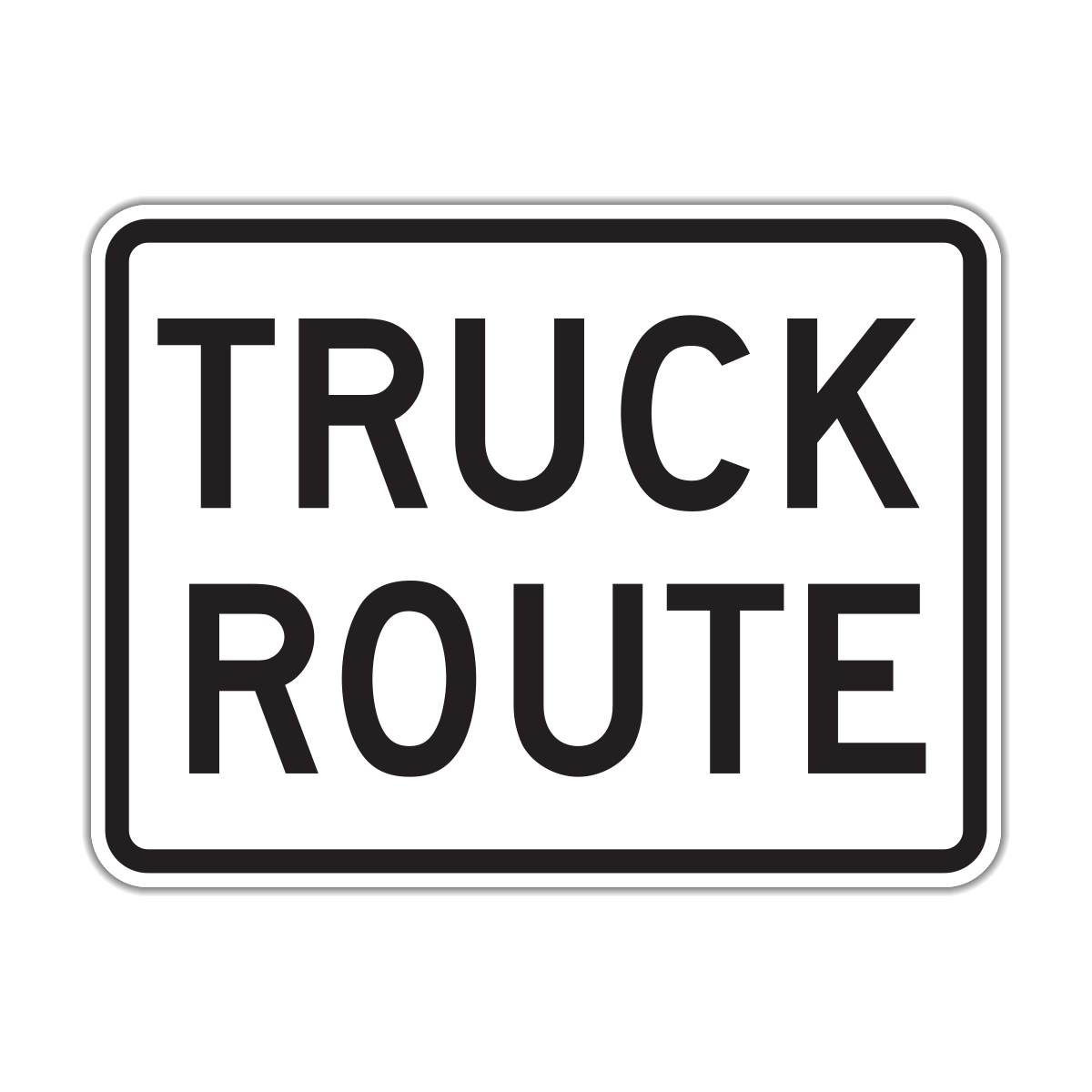
Indicates a designated route that trucks should follow, often required for large or heavy vehicles.
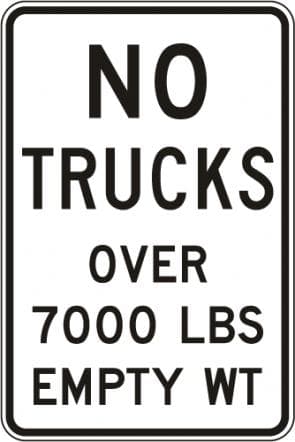
Prohibits trucks above a specified weight from using this road or bridge for safety or structural reasons.
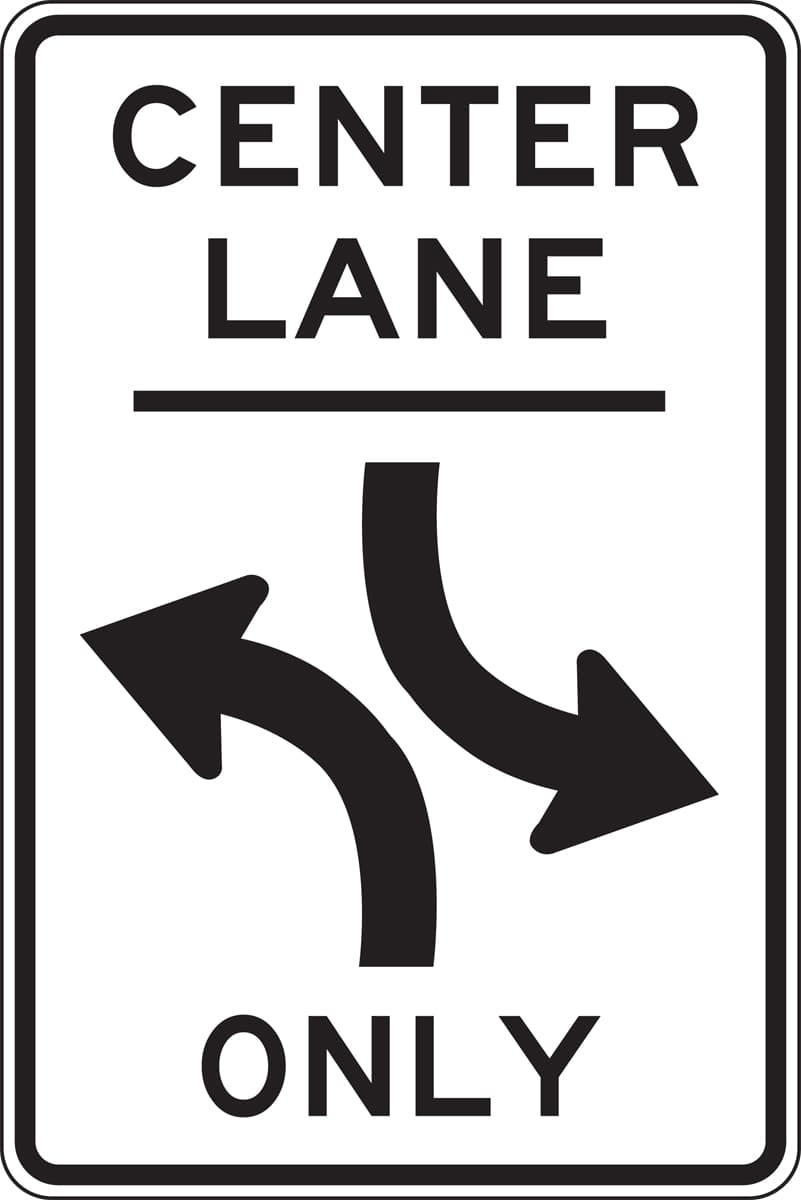
Restricts the center lane to left turns from both directions; through traffic must use other lanes.
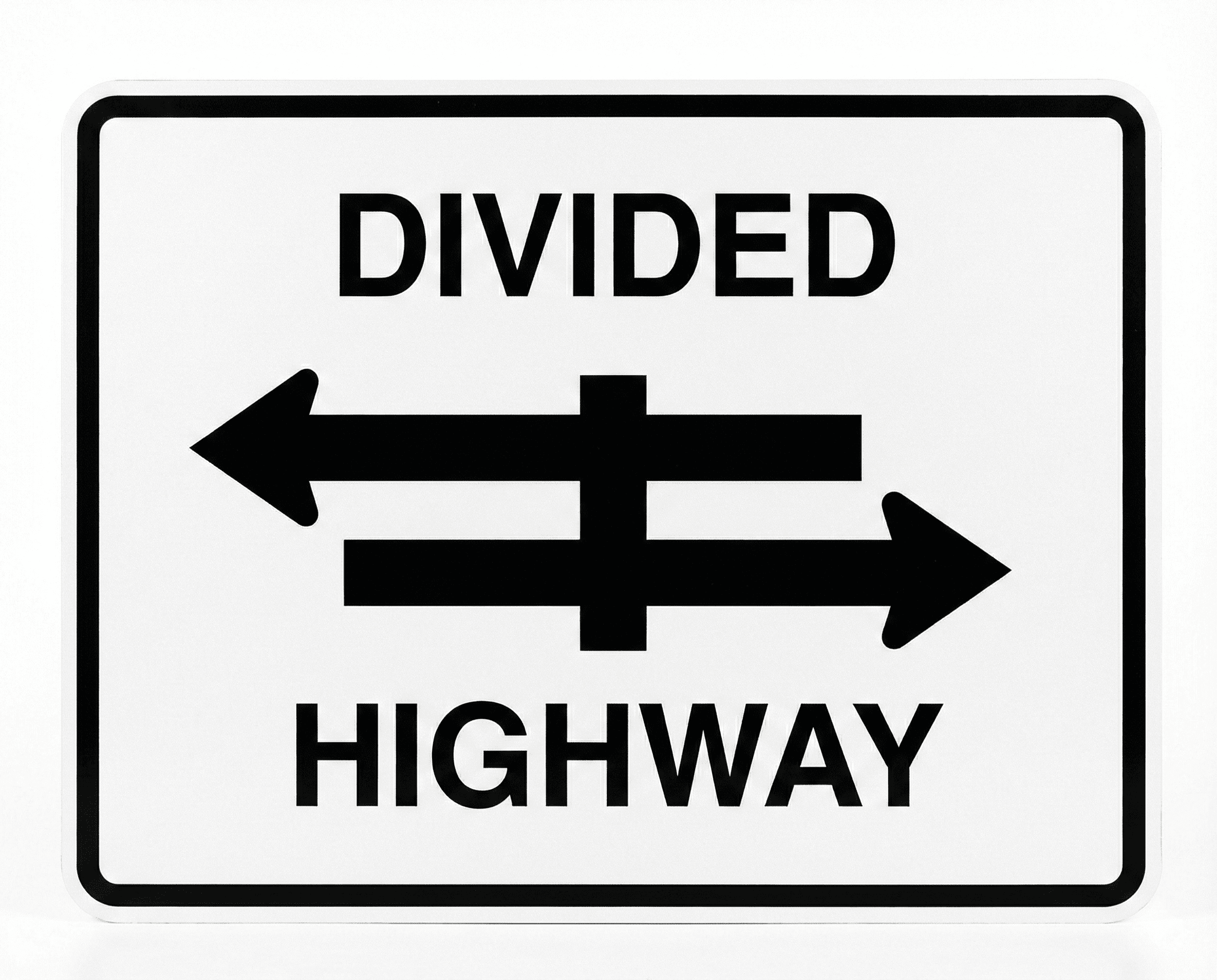
Indicates opposing traffic is separated by a median or barrier; stay to the right of the divider.
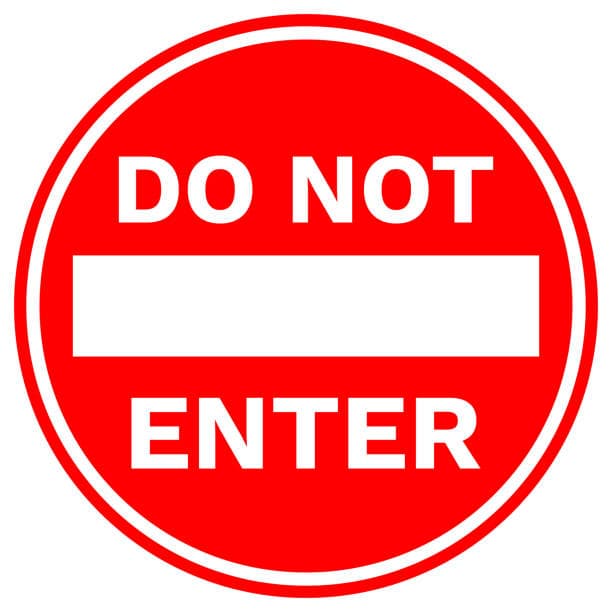
A regulatory sign that prohibits entry to a roadway or ramp; turning around is required.
Most commonly tested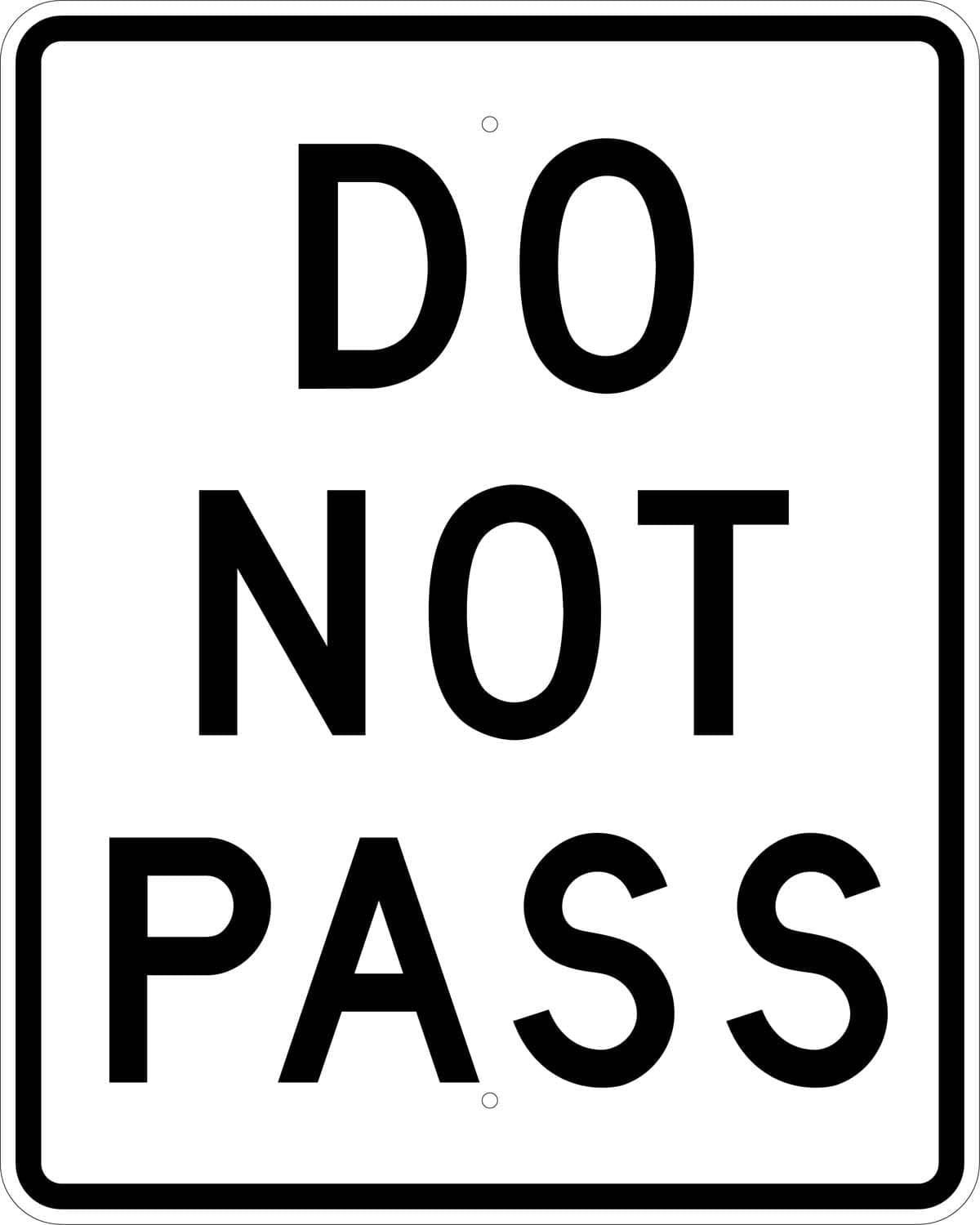
Forbids passing other vehicles in this zone because of limited sight distance or other hazards.
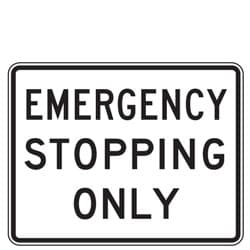
Limits shoulder or roadside use to emergencies; routine parking or stopping is not allowed.
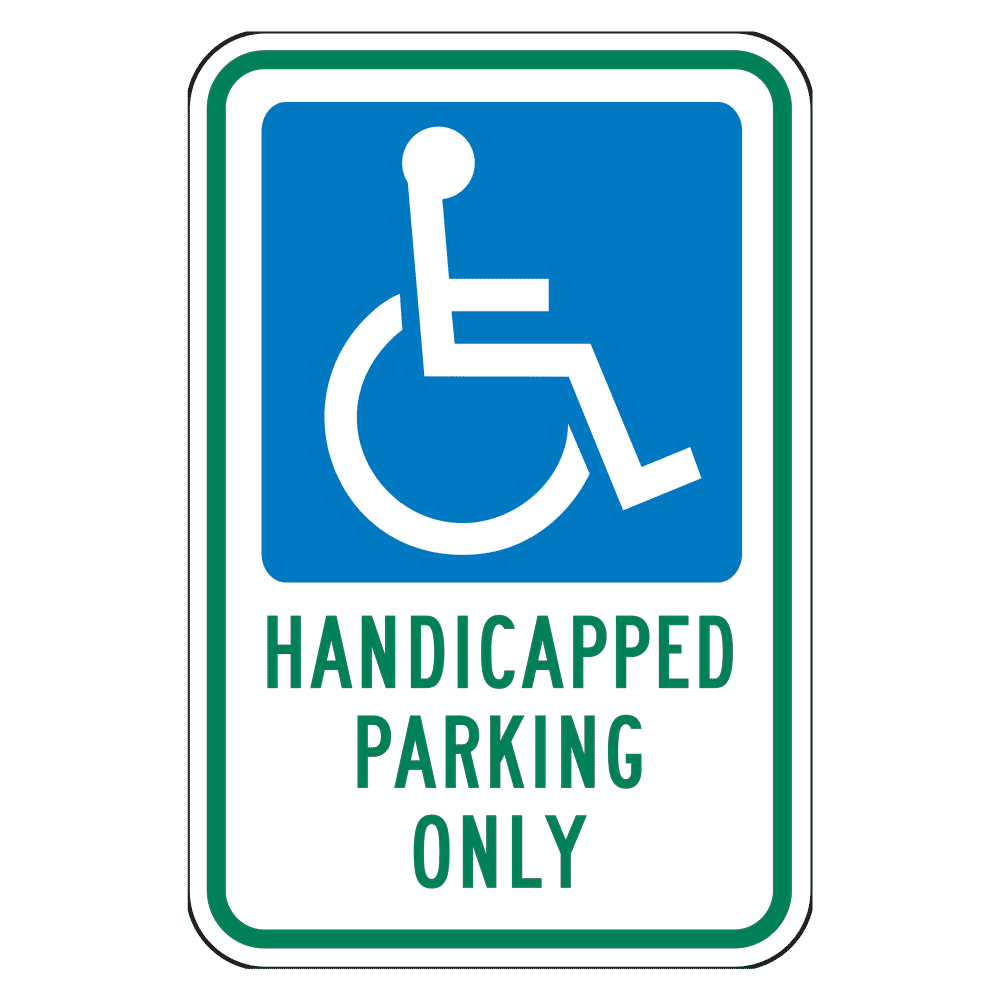
Reserves parking exclusively for vehicles with valid disability permits or plates.
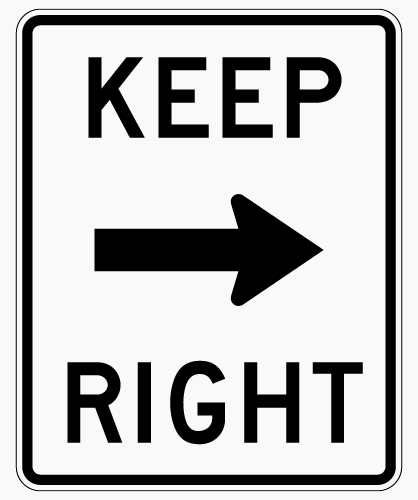
Traffic must stay to the right of a divider or obstruction.
Most commonly tested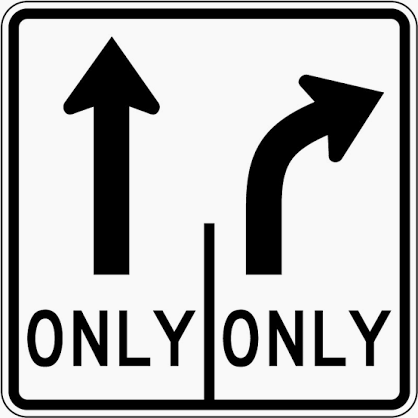
Shows which maneuvers are permitted from each lane at an intersection (straight, left, right, or combinations).
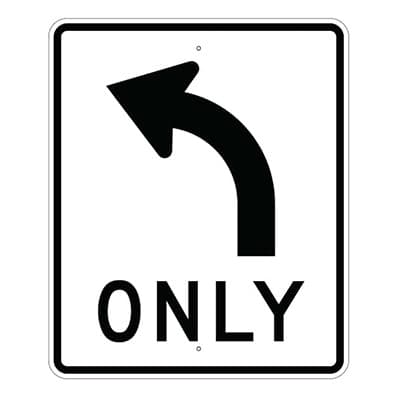
Requires vehicles in this lane to make a left turn; no straight or right movement allowed.
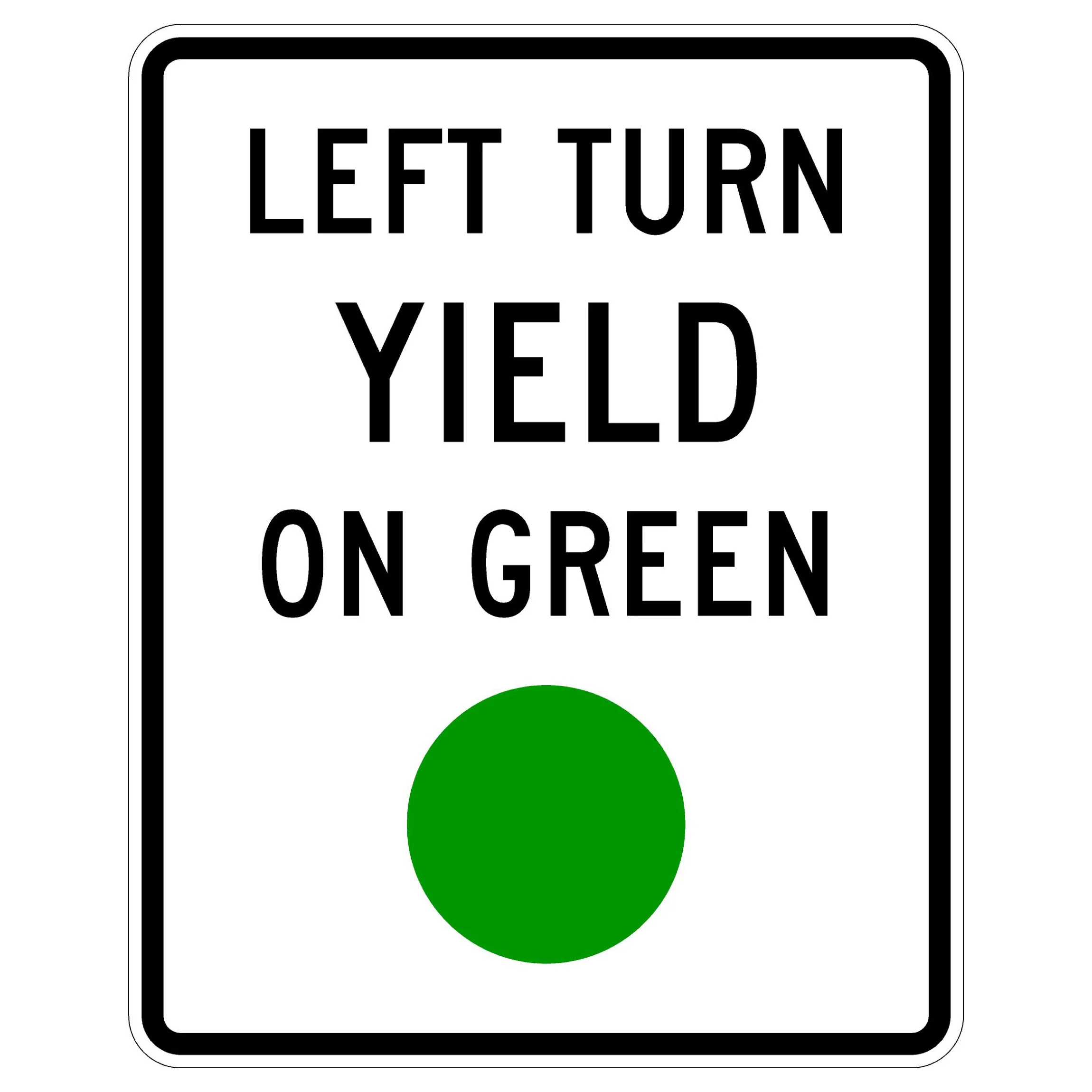
Allows left turns on green but drivers must yield to oncoming traffic and pedestrians.
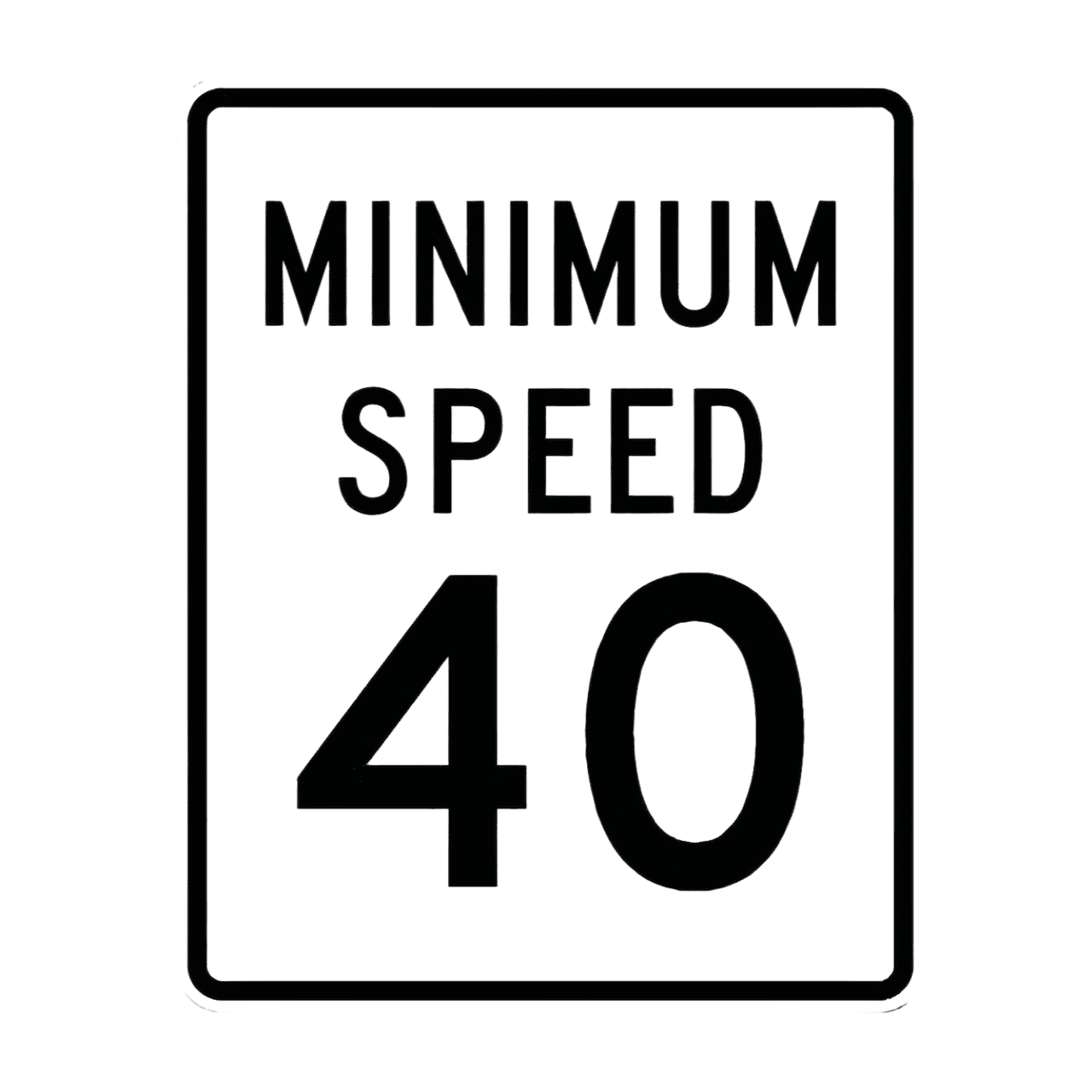
Sets the slowest speed allowed under normal conditions to keep traffic flowing safely.
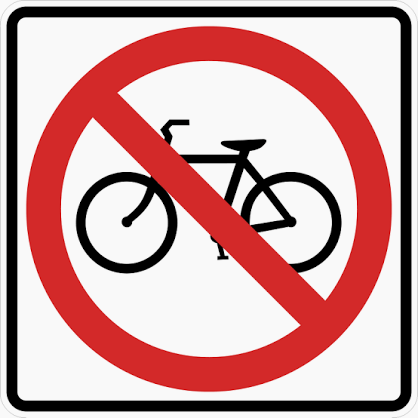
Prohibits bicycles from using this roadway, ramp, or area for safety or traffic reasons.
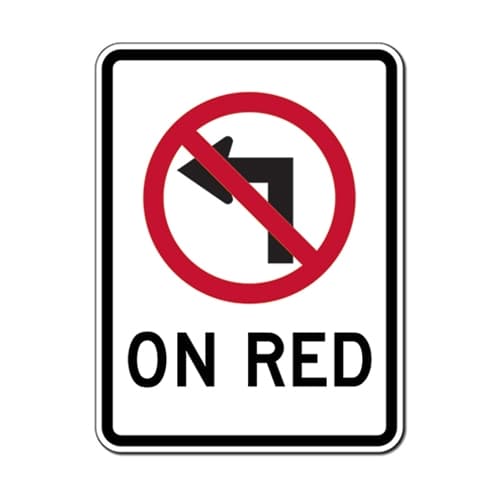
Left turns on red are prohibited, even from a one-way to a one-way street.
Most commonly tested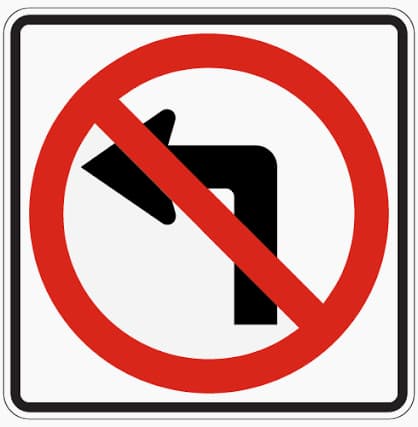
Left turns are not allowed here; follow the roadway or choose another route.
Most commonly tested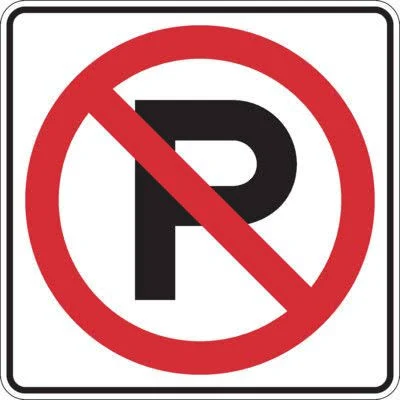
Forbids parking within the area or times shown; stopping to load or unload may be limited.
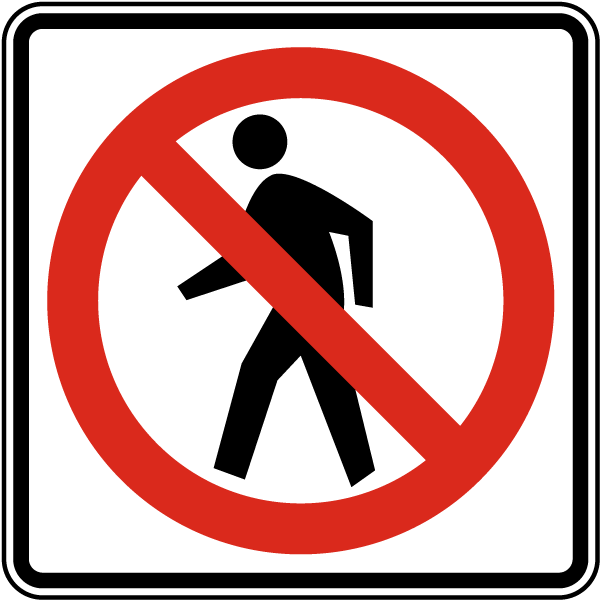
Pedestrians may not cross at this point; they must use another marked crossing or intersection.
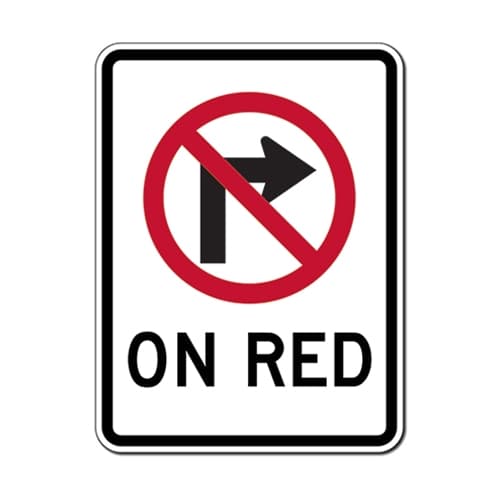
Right turns on red are prohibited; remain stopped until the light turns green.
Most commonly tested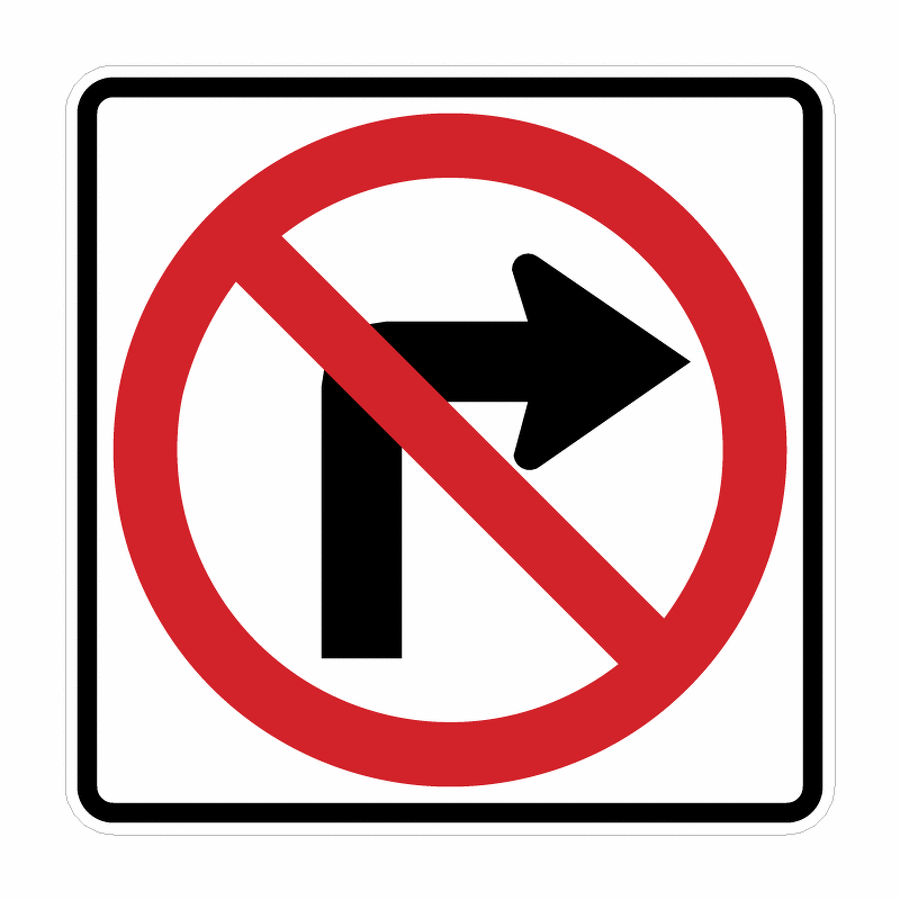
Right turns are prohibited at this intersection or roadway.
Most commonly tested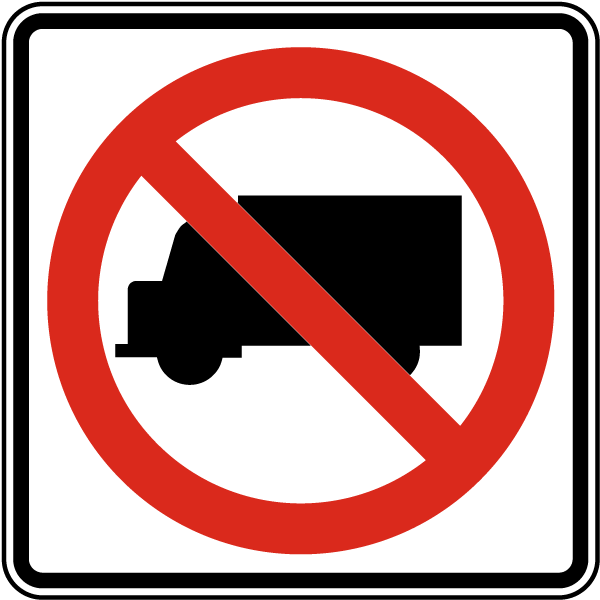
Restricts large trucks from this roadway or lane due to weight, size, or local regulations.
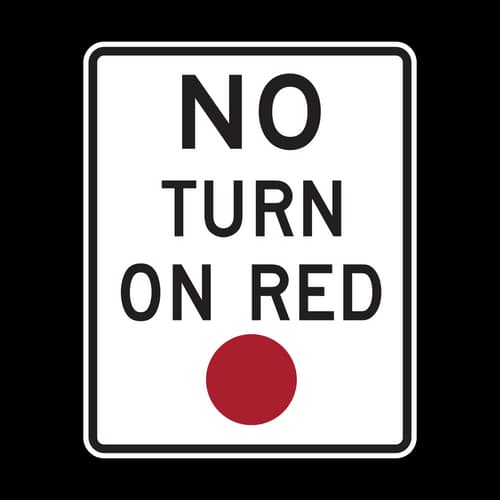
Right turns on red are not allowed; wait for a green signal.
Most commonly tested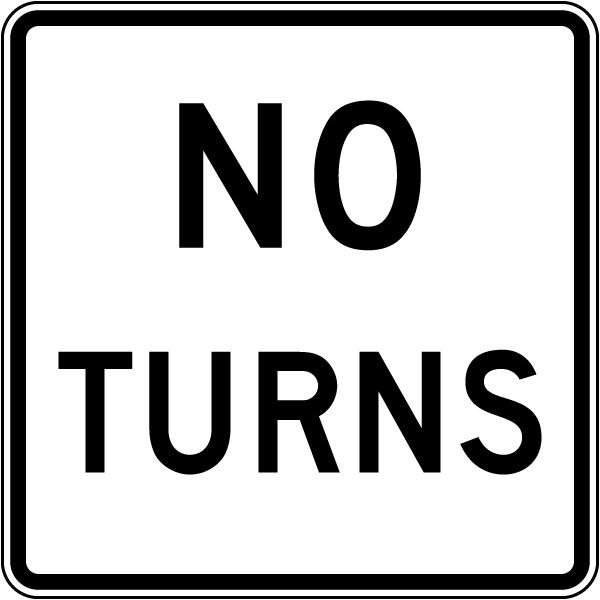
No Turns regulatory sign telling drivers what is required or prohibited at this location. Obey to avoid violations.
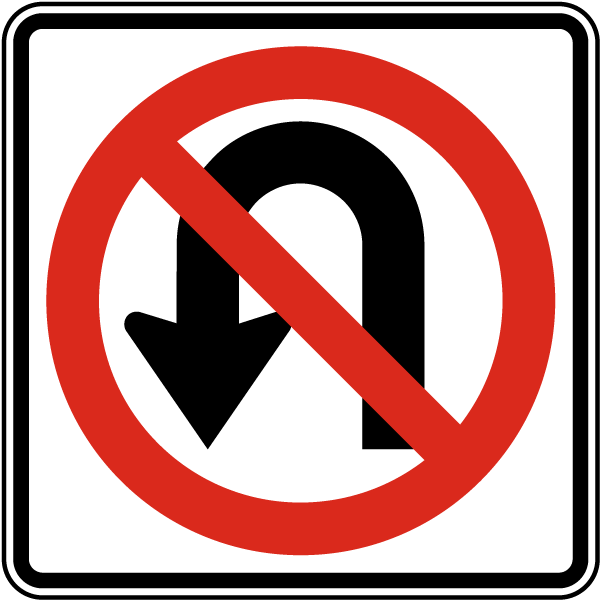
U-turns are prohibited at this location; continue to the next legal turn point.
Most commonly tested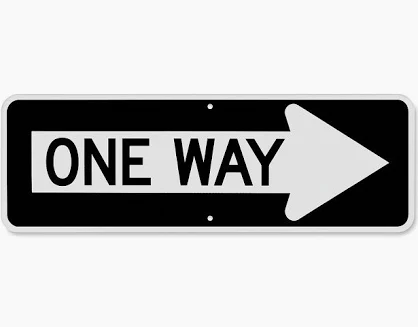
Traffic flows only in the direction shown; entering from the opposite direction is illegal.
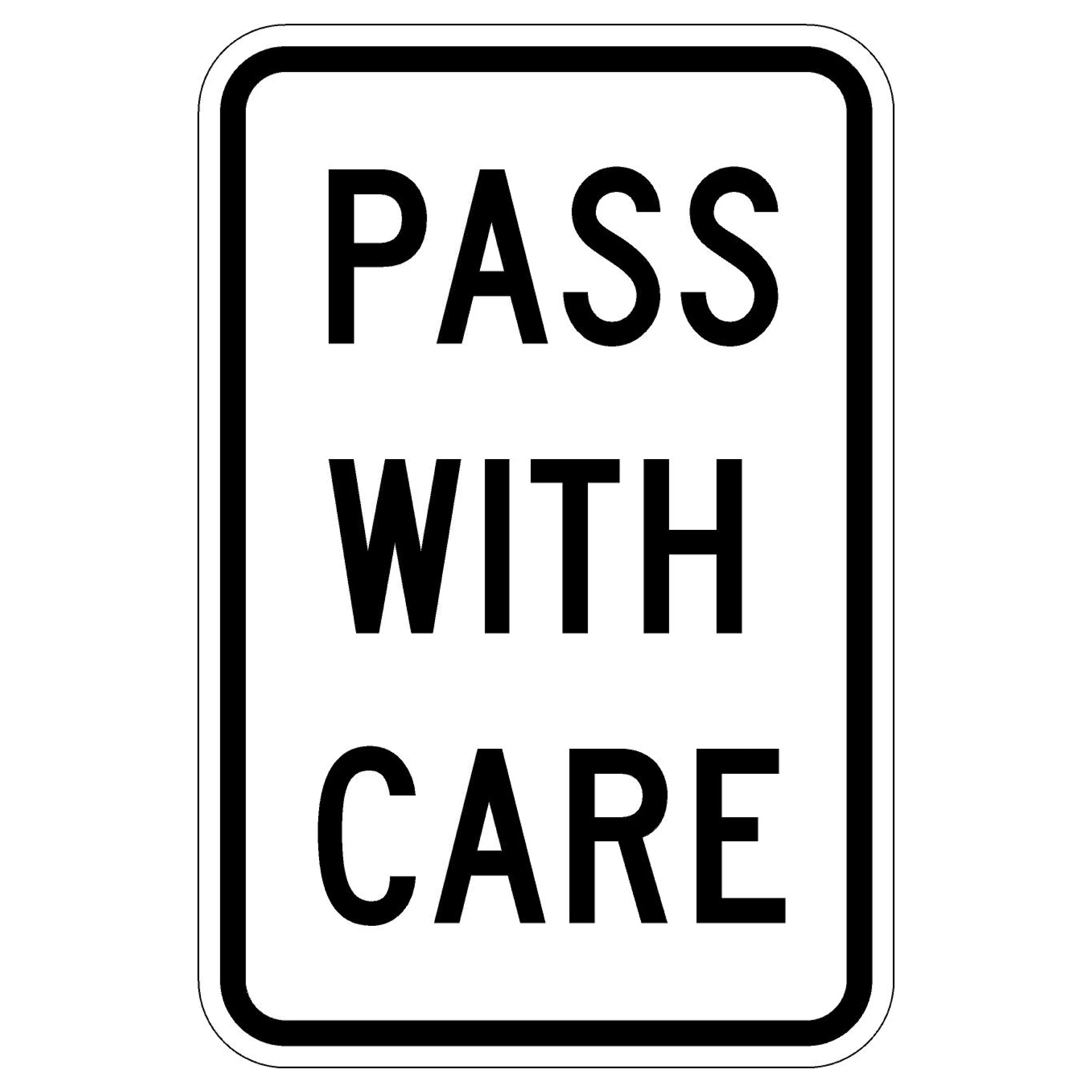
You may pass, but only when the lane is clear and safe to do so.
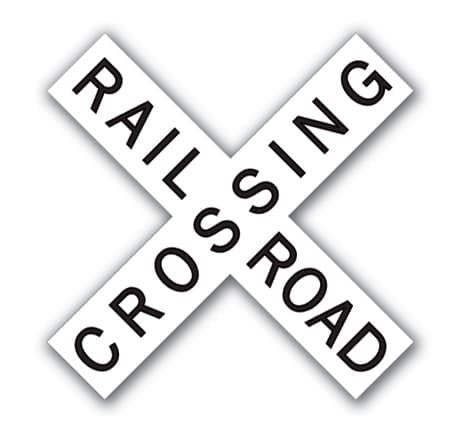
Marks a railroad crossing; look both ways, listen, and be prepared to stop for trains.
Most commonly tested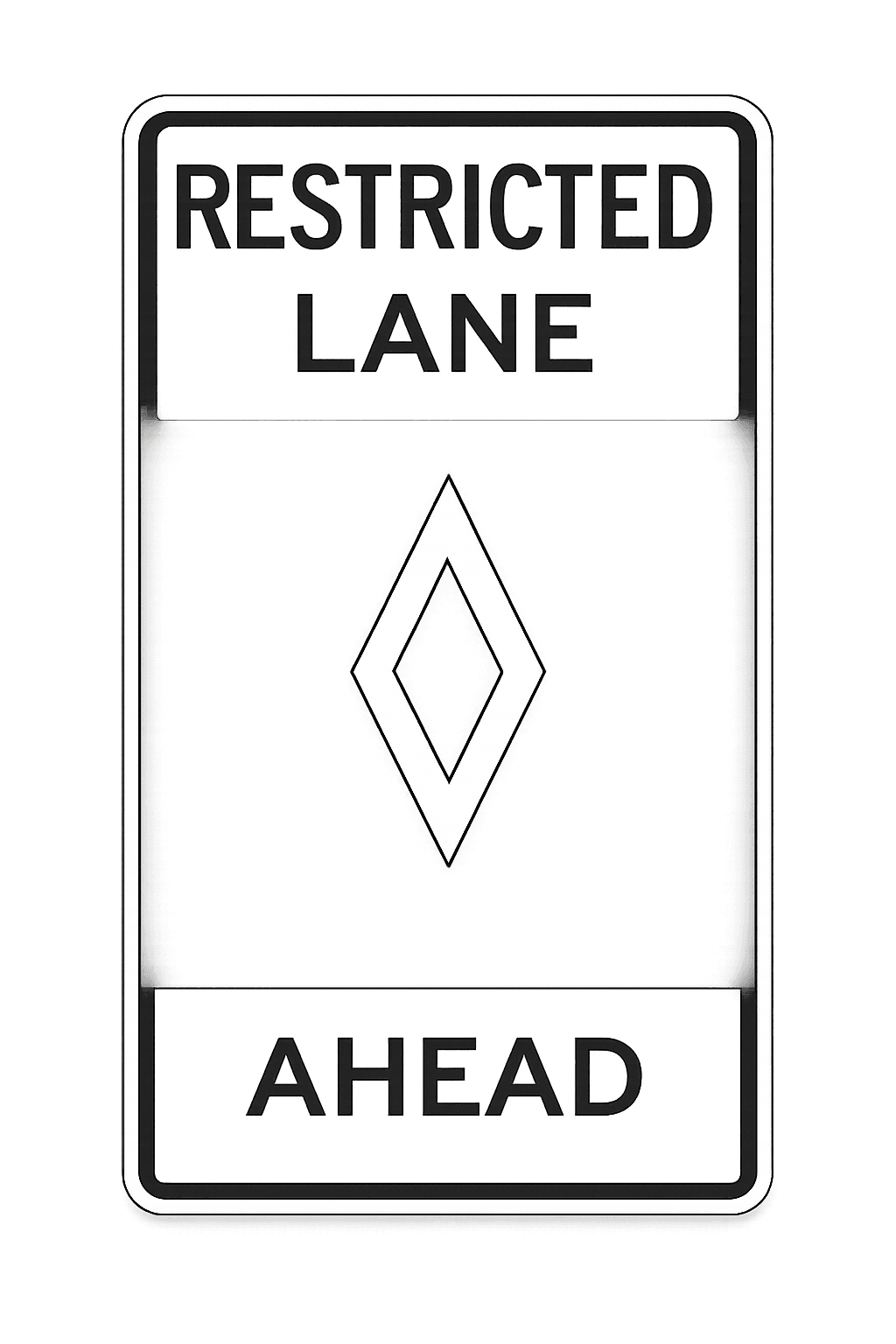
Warns that a lane ahead is reserved (e.g., HOV, buses, bikes) during certain times or always.
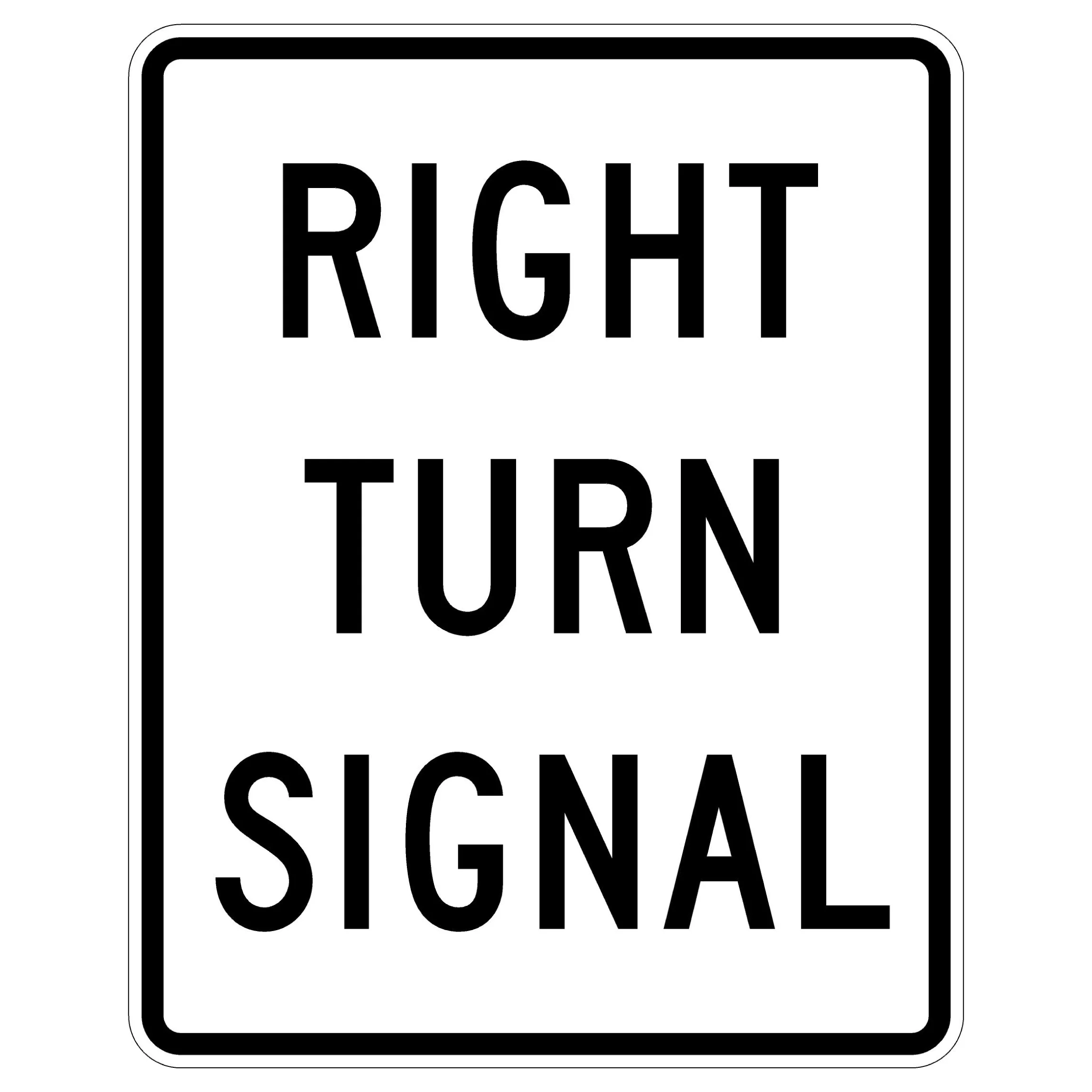
A separate signal controls right turns; obey the right-turn signal indication.
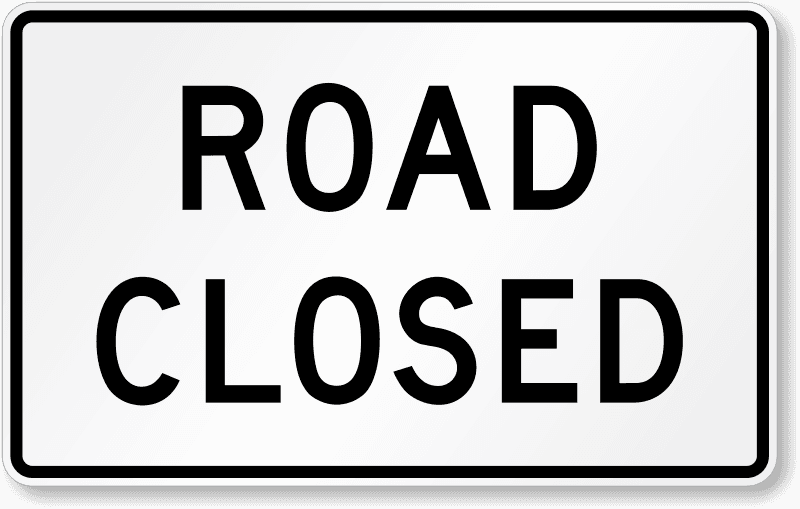
The roadway ahead is closed to all traffic; follow posted detours.
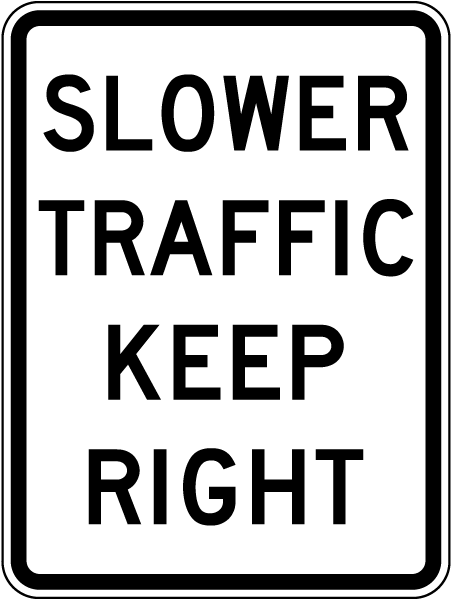
Slower vehicles must use the right lane so faster traffic can pass on the left.
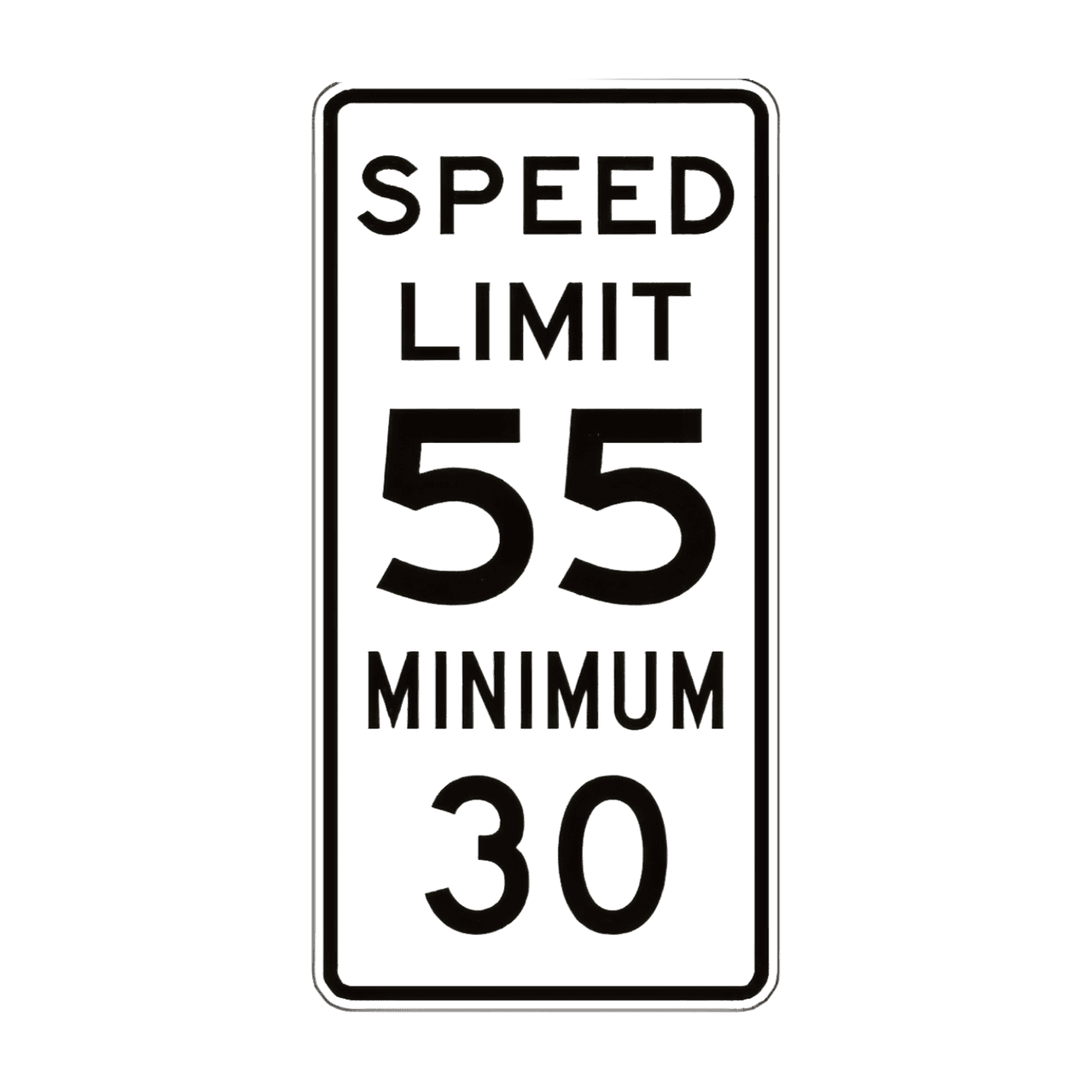
Shows both the highest and lowest legal speeds allowed on this stretch of road.
Most commonly tested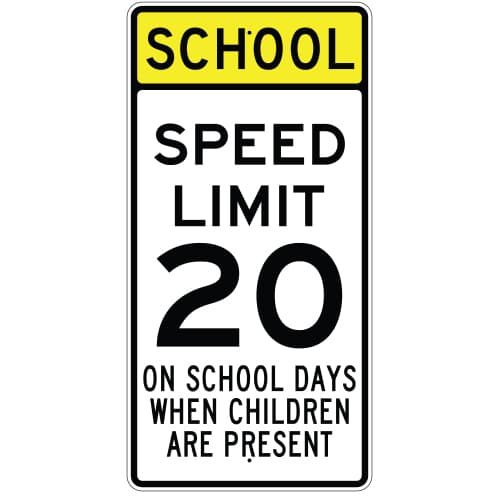
Sets a reduced speed within a school zone to protect children and pedestrians at certain times.
Most commonly tested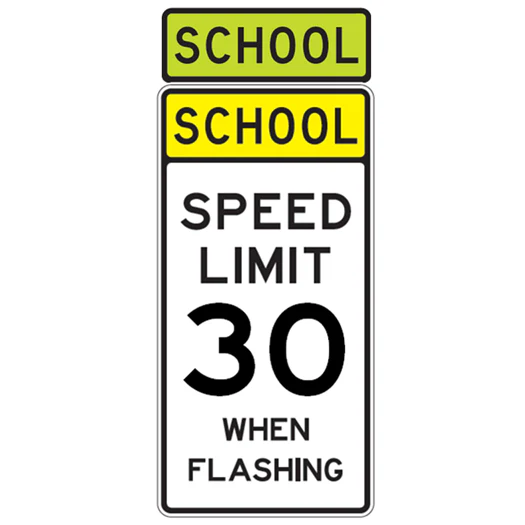
Lower speed applies only when the attached yellow lights are flashing.
Most commonly tested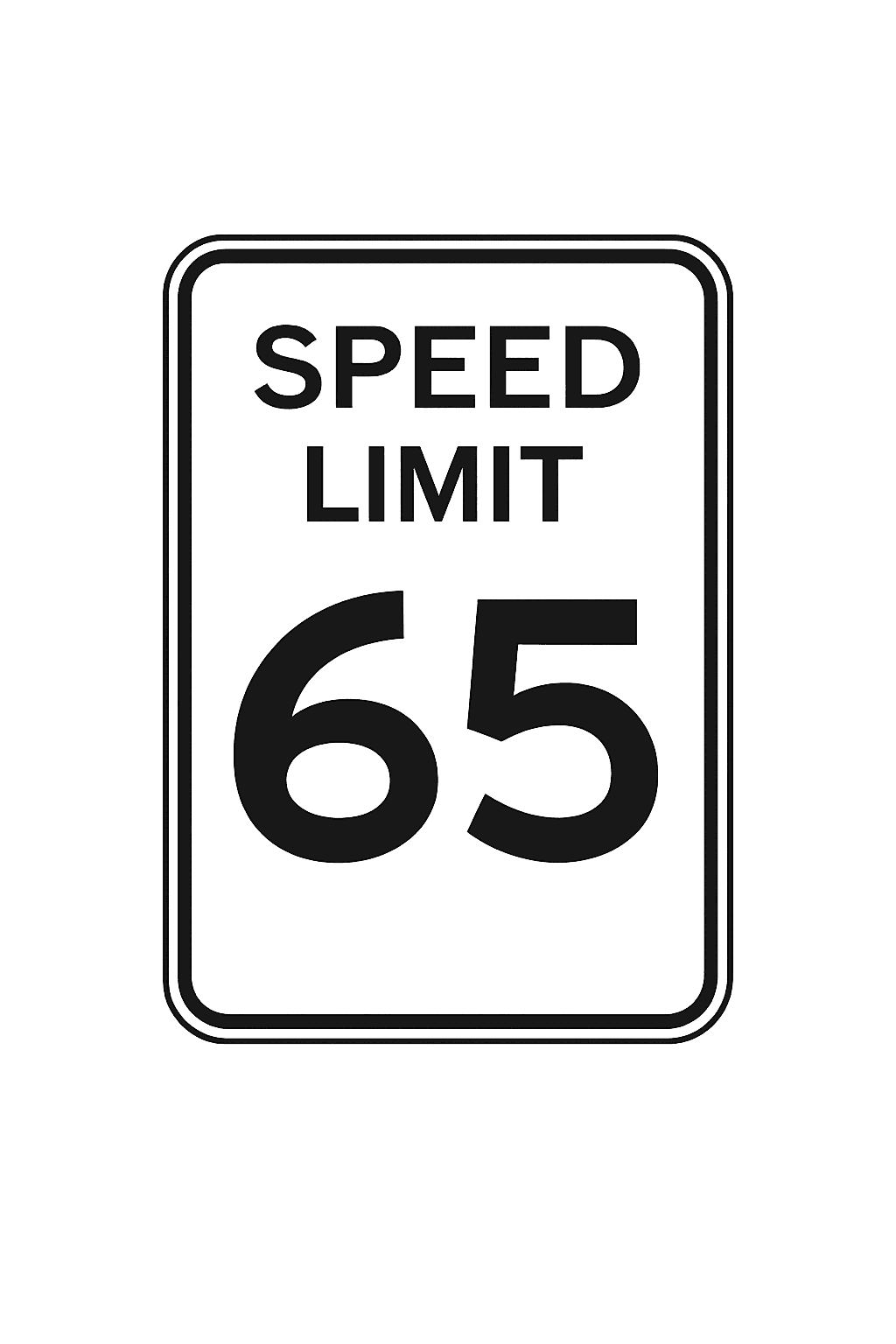
Posted legal speed for this stretch of road; exceeding it can result in citations.
Most commonly tested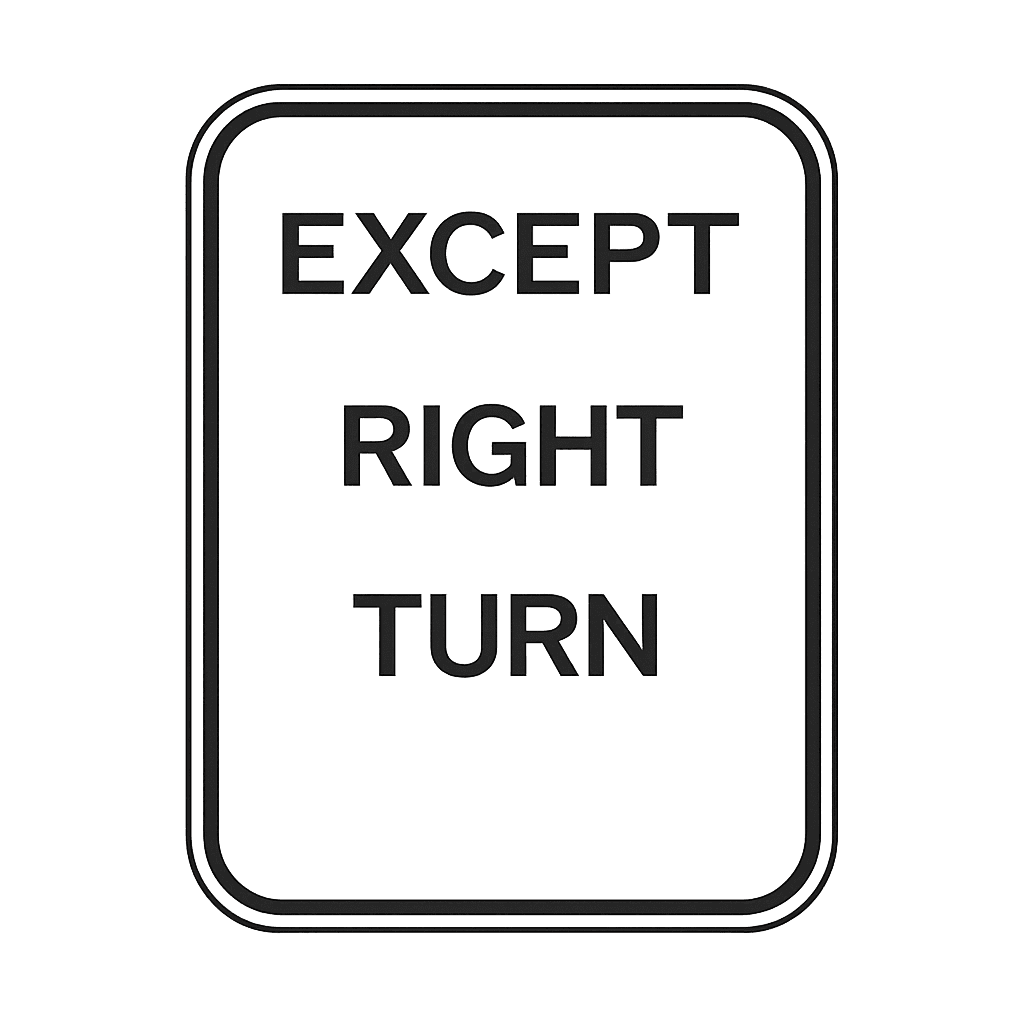
Requires a complete stop, but a right turn may proceed when safe and permitted.
Most commonly tested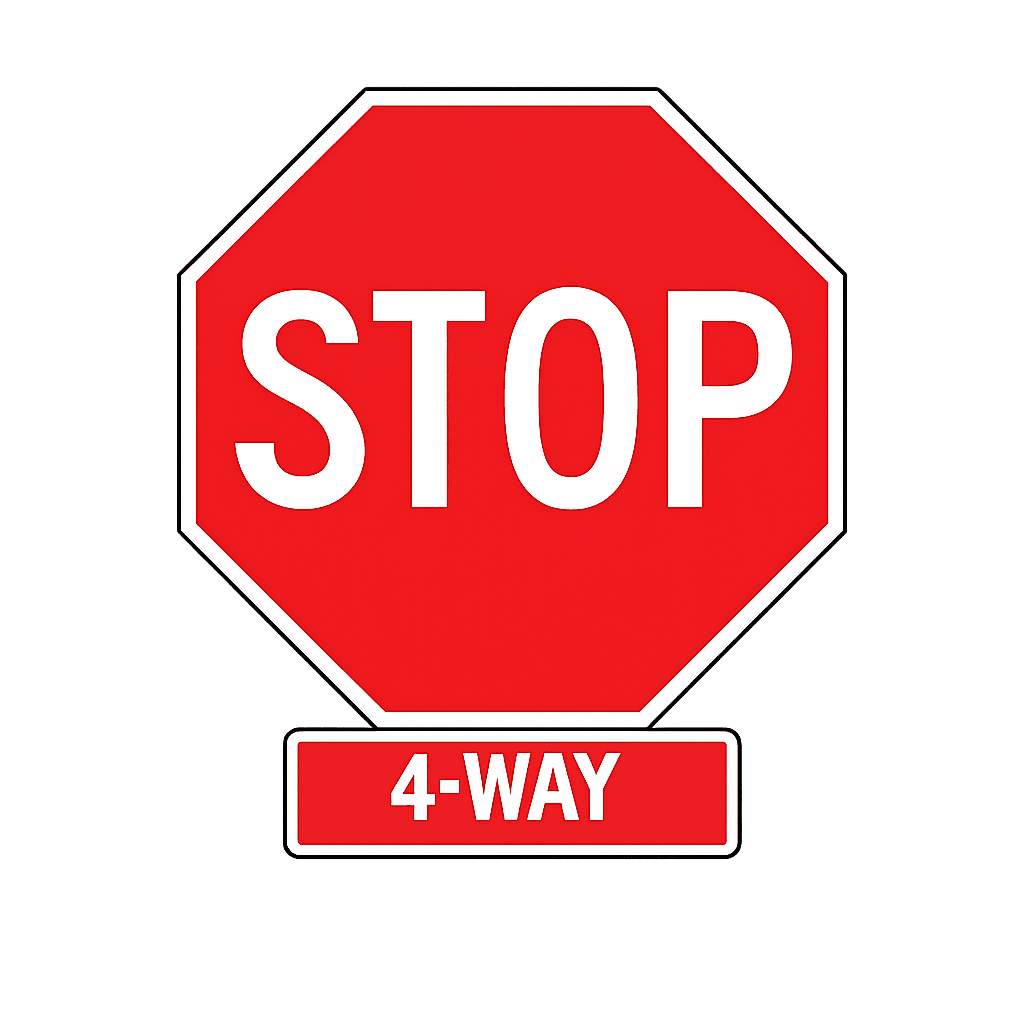
All approaches must stop; proceed in the order vehicles arrive.
Most commonly tested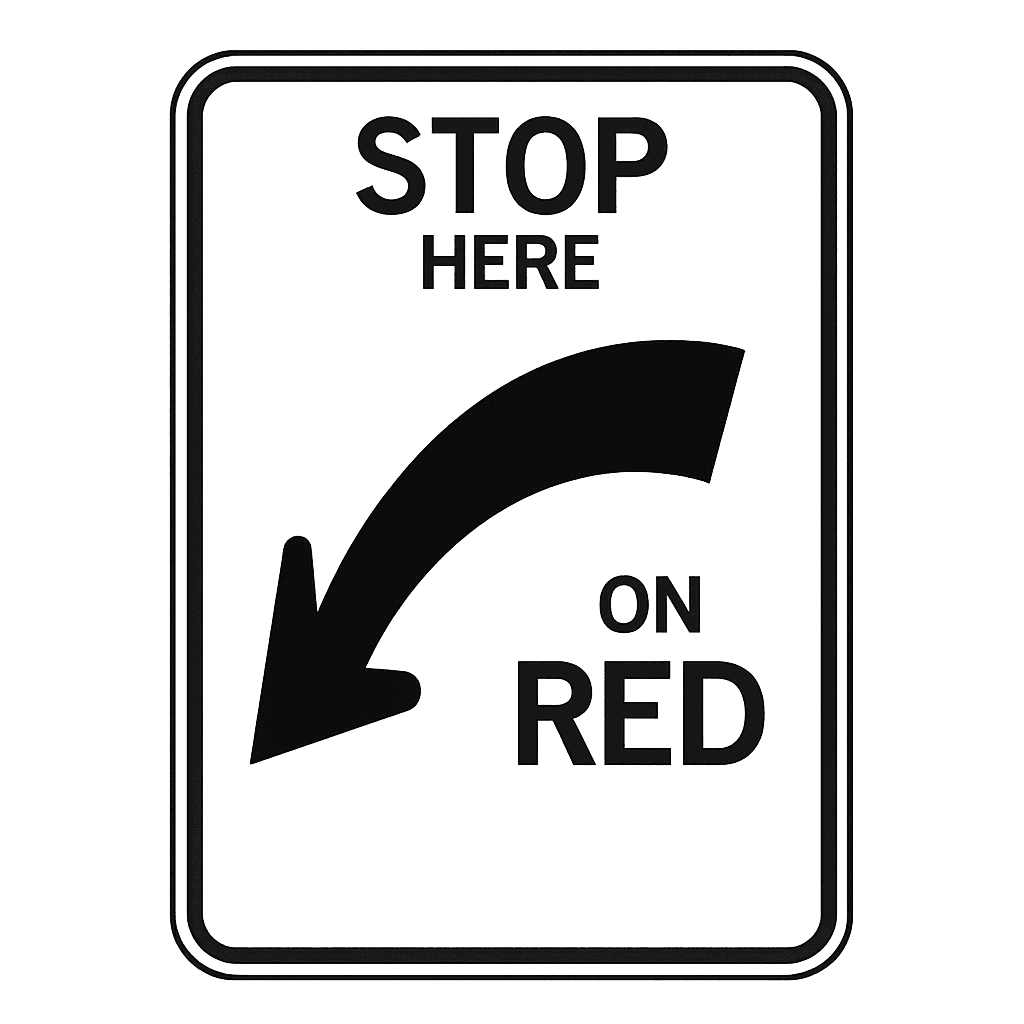
Tells drivers where to stop at a red signal, often before a crosswalk or stop line.
Most commonly tested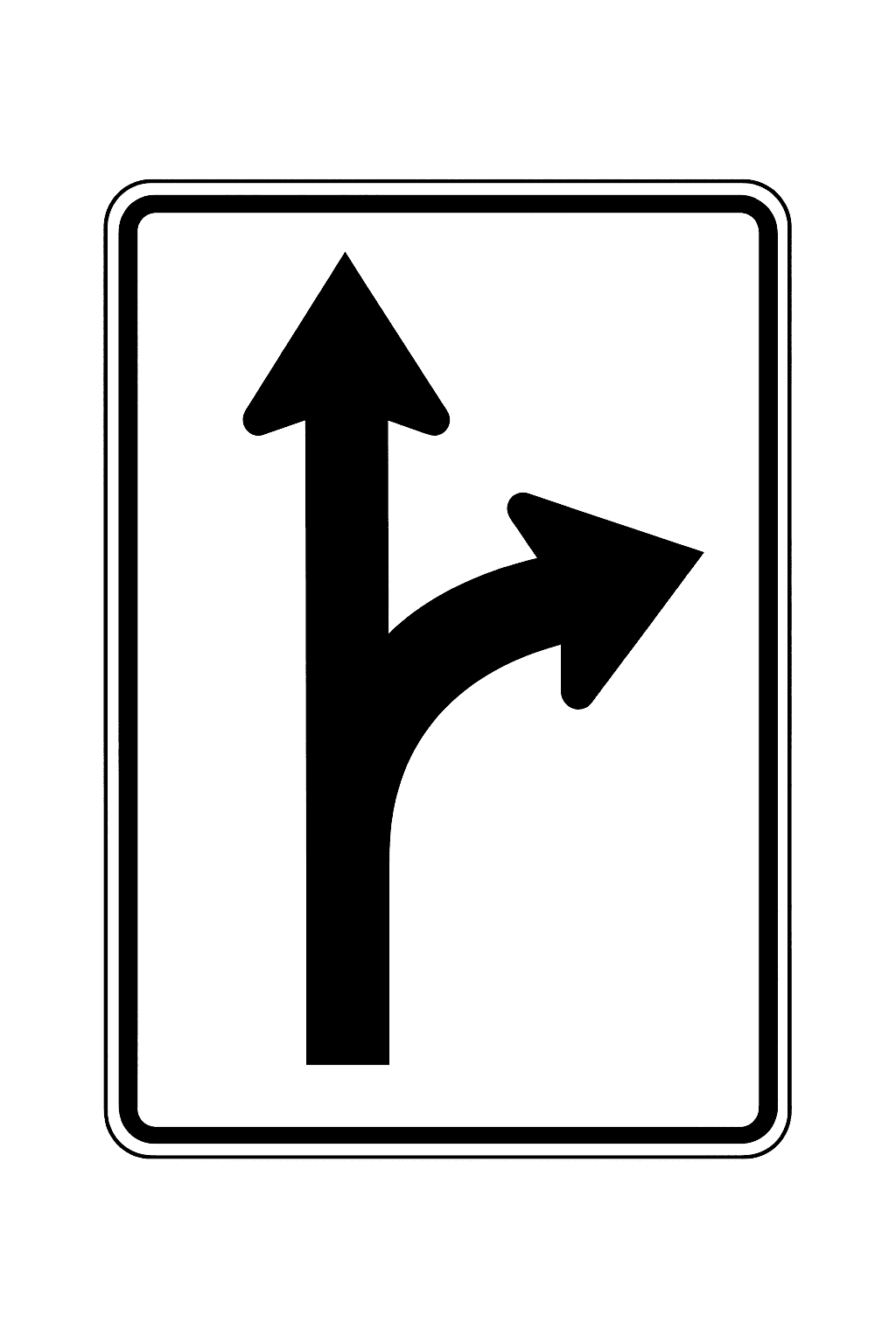
Limits movements from this lane to going straight ahead or turning right only.
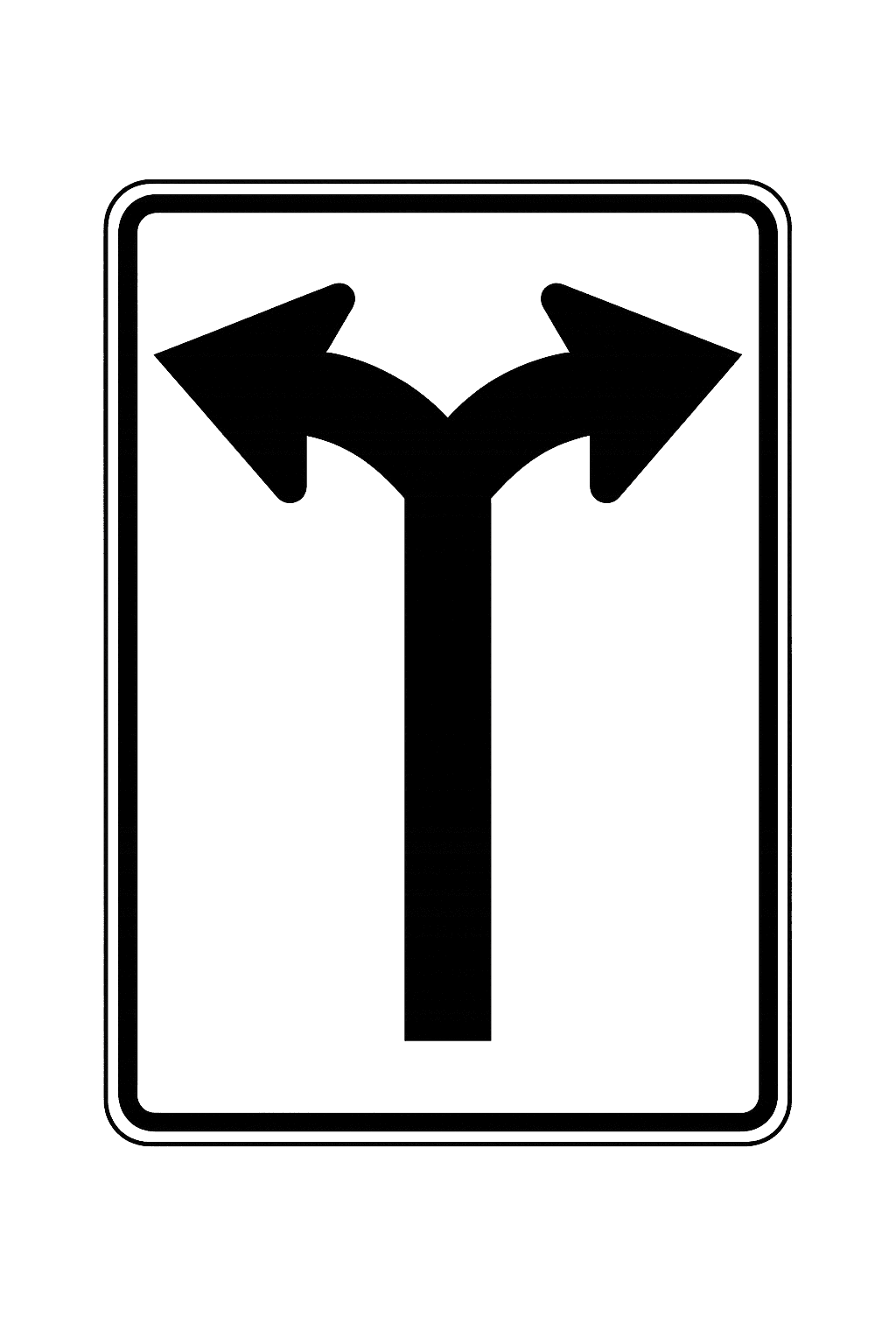
Drivers in this lane must turn left or right; going straight is not allowed.
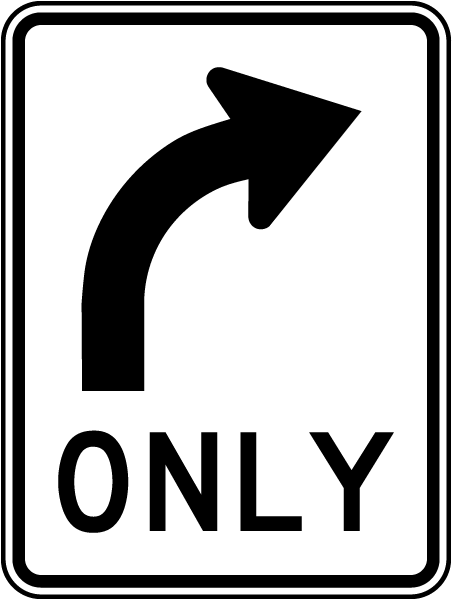
Restricts the lane to right turns only at the upcoming intersection or junction.
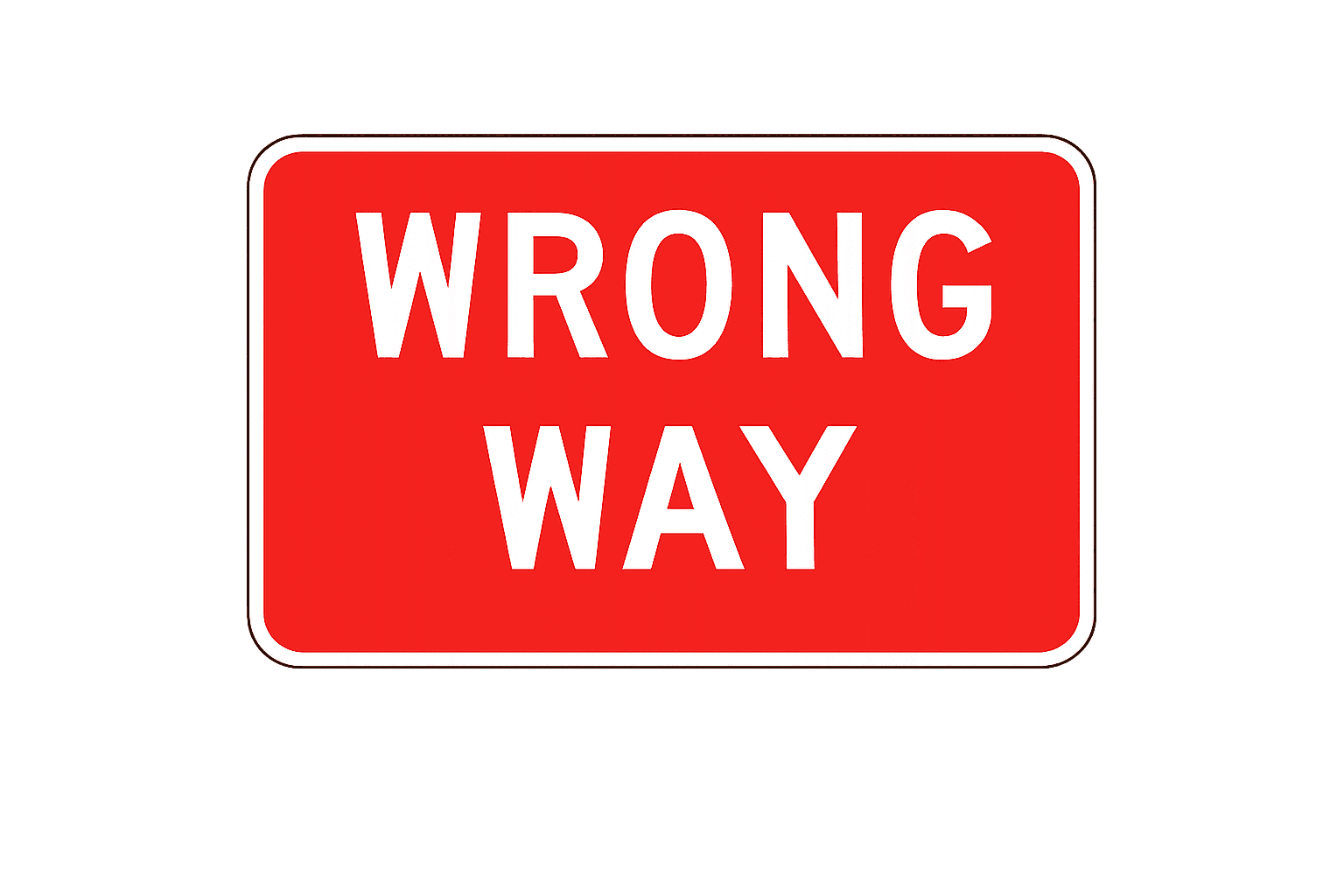
Warns you are traveling against traffic; turn around safely immediately.
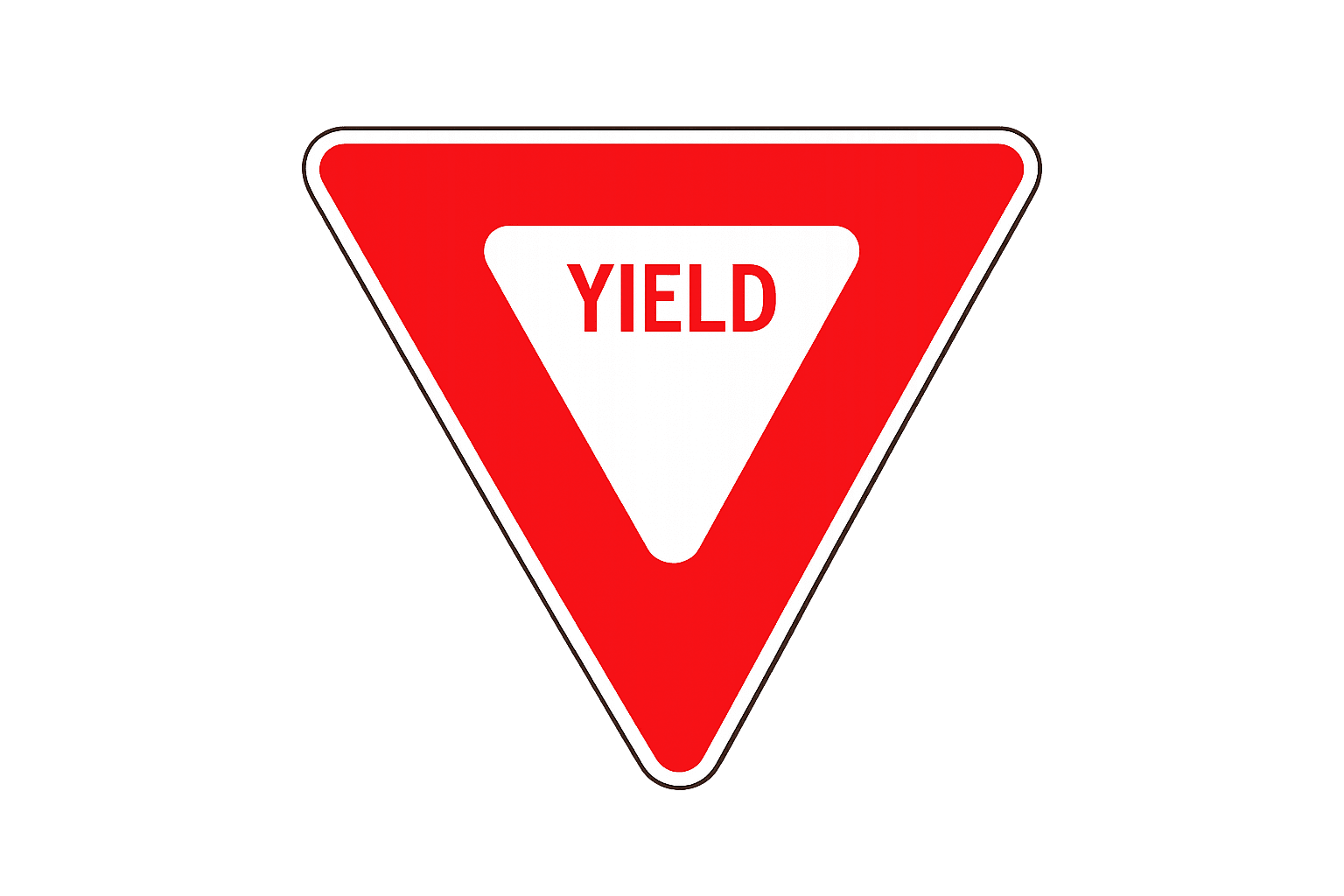
A red and white triangular sign meaning slow down and give the right of way to traffic and pedestrians.
Most commonly tested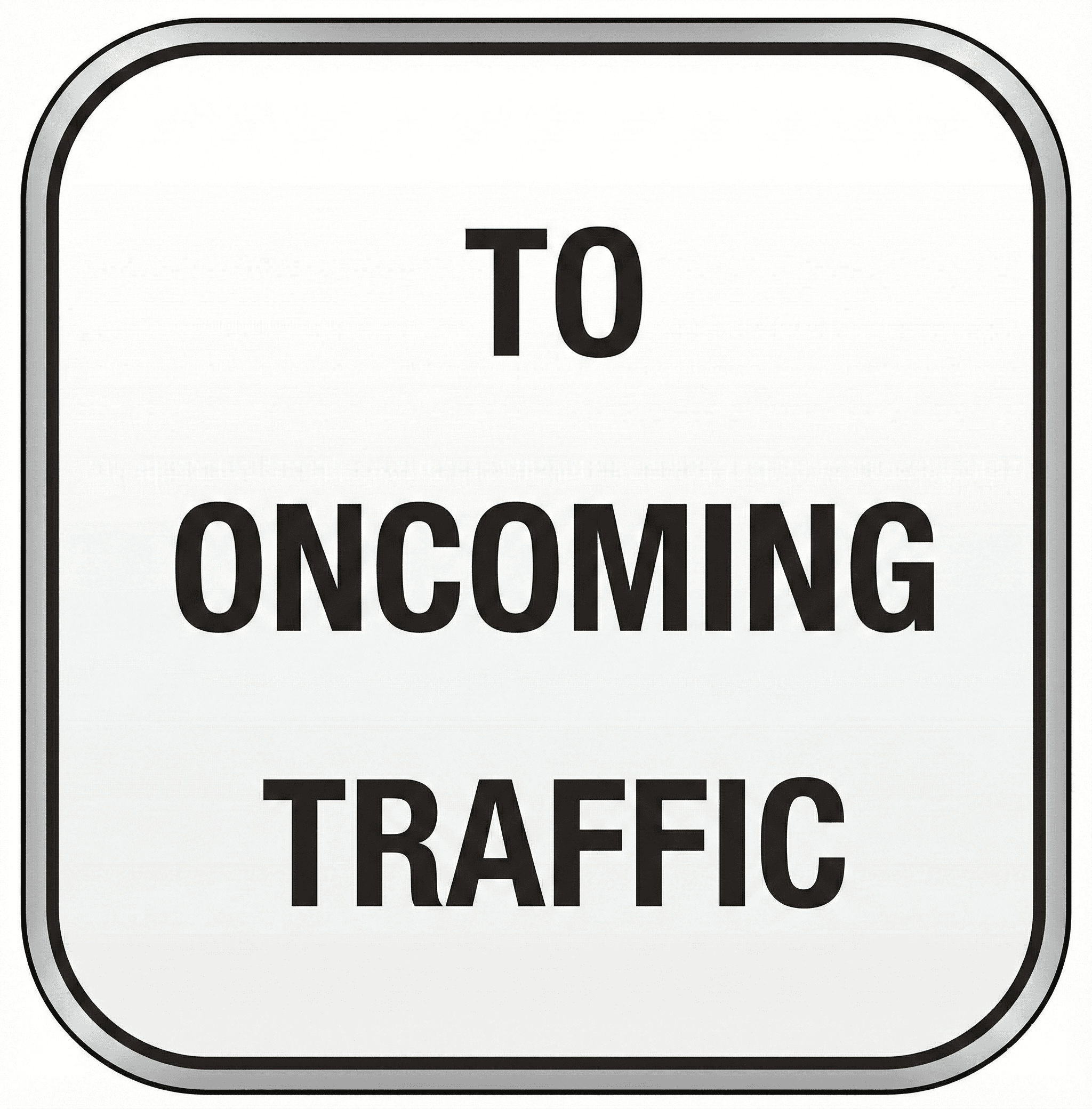
Indicates oncoming traffic has priority; wait for a safe gap before proceeding.
Most commonly testedWarning Signs
Alabama warning road signs on the DMV written test.
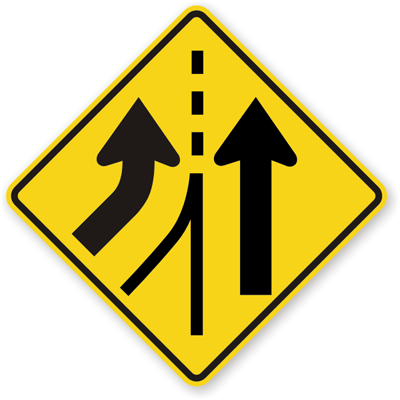
Alerts that an additional lane will join your roadway ahead without requiring merging.
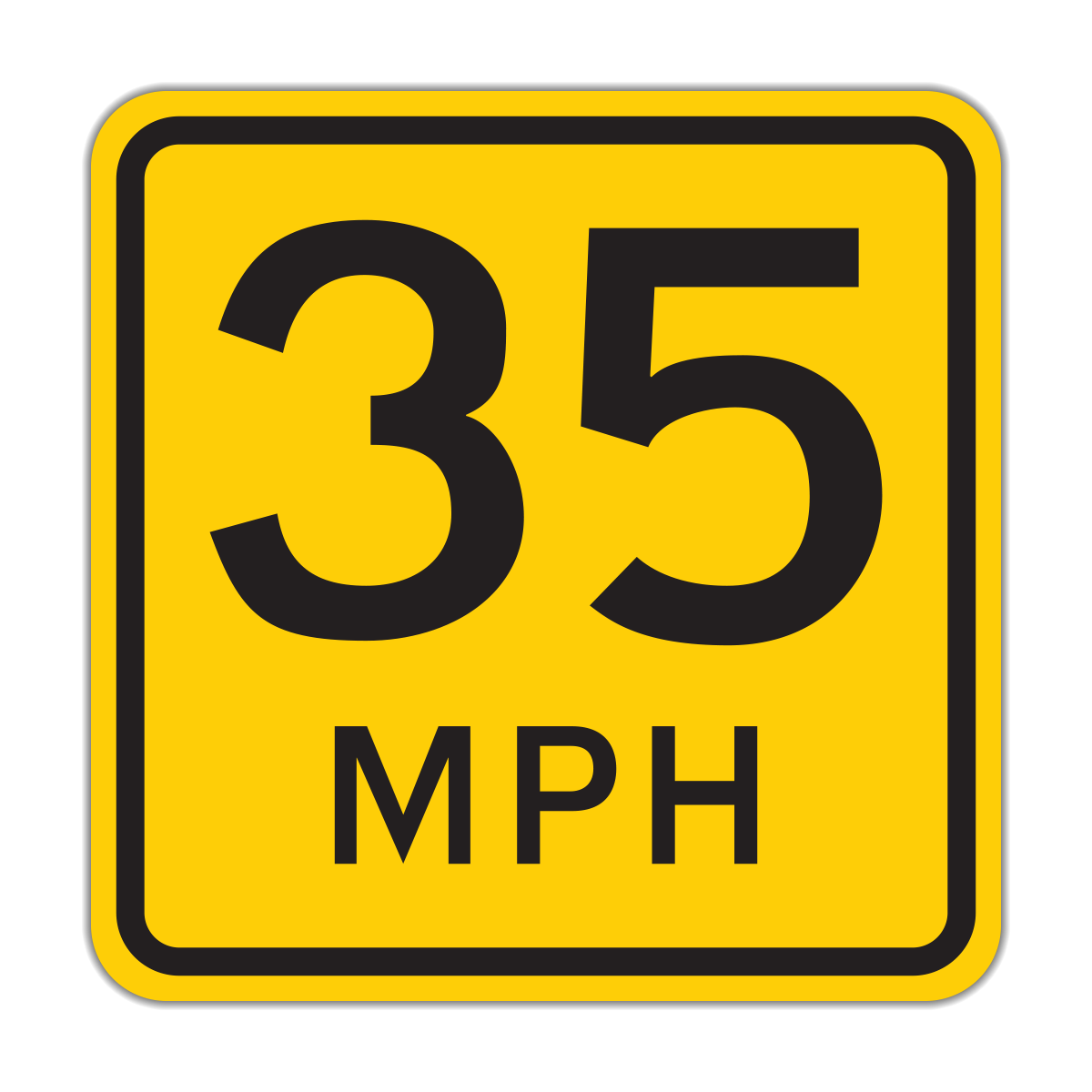
Recommends a safe speed for a curve, ramp, or condition, often lower than the posted limit.
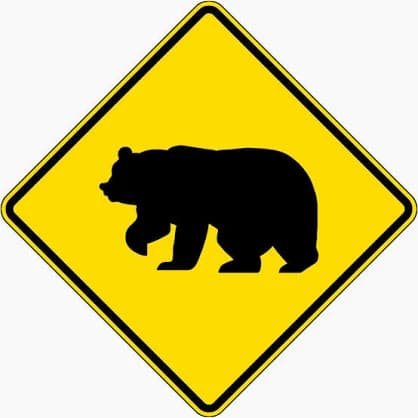
Warns that bears may cross the road in this area, especially in rural or forested regions.
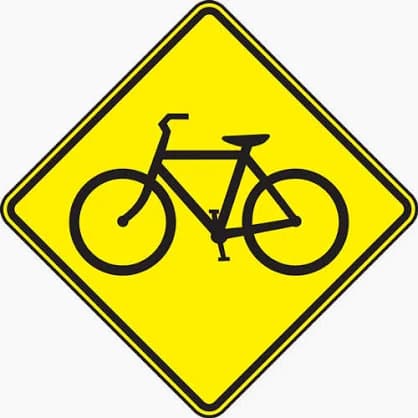
Warns that cyclists frequently cross or share the roadway at this point; slow and watch for bikes.
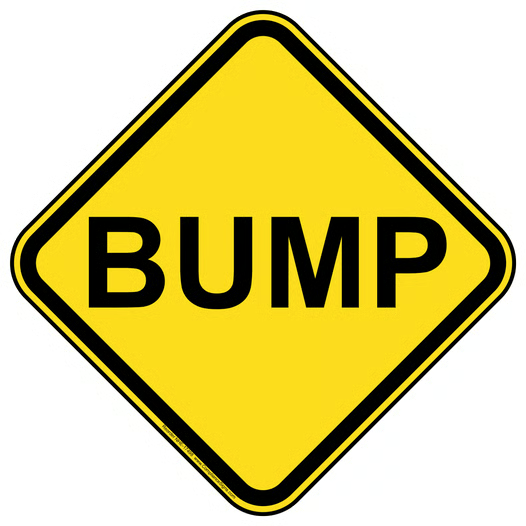
Indicates a raised section of pavement; reduce speed to avoid discomfort or loss of control.
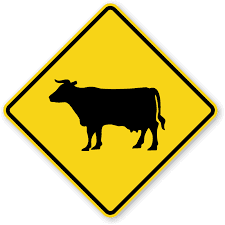
Indicates that cattle may be on or near the roadway; reduce speed and watch for animals.
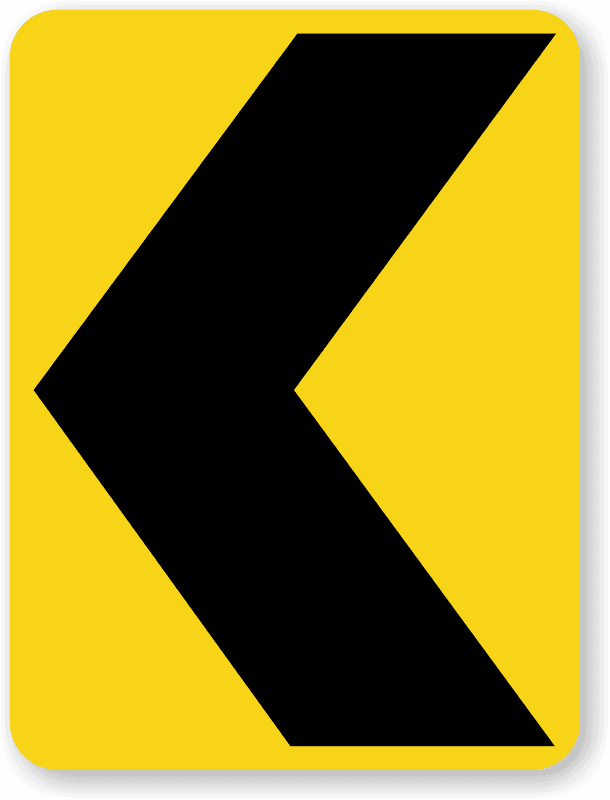
Emphasizes a sharp change of direction to the left along a curve or turn.
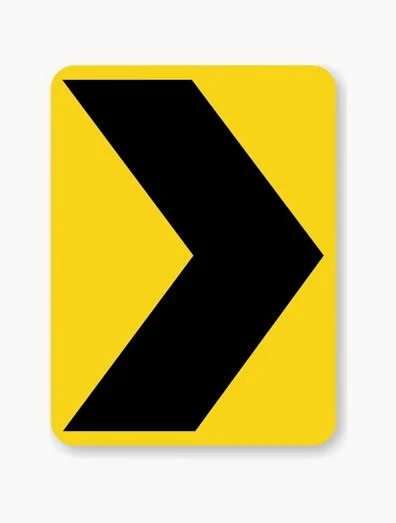
Emphasizes a sharp change of direction to the right along a curve or turn.
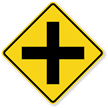
Signals an upcoming four-way intersection where traffic may enter from side roads.
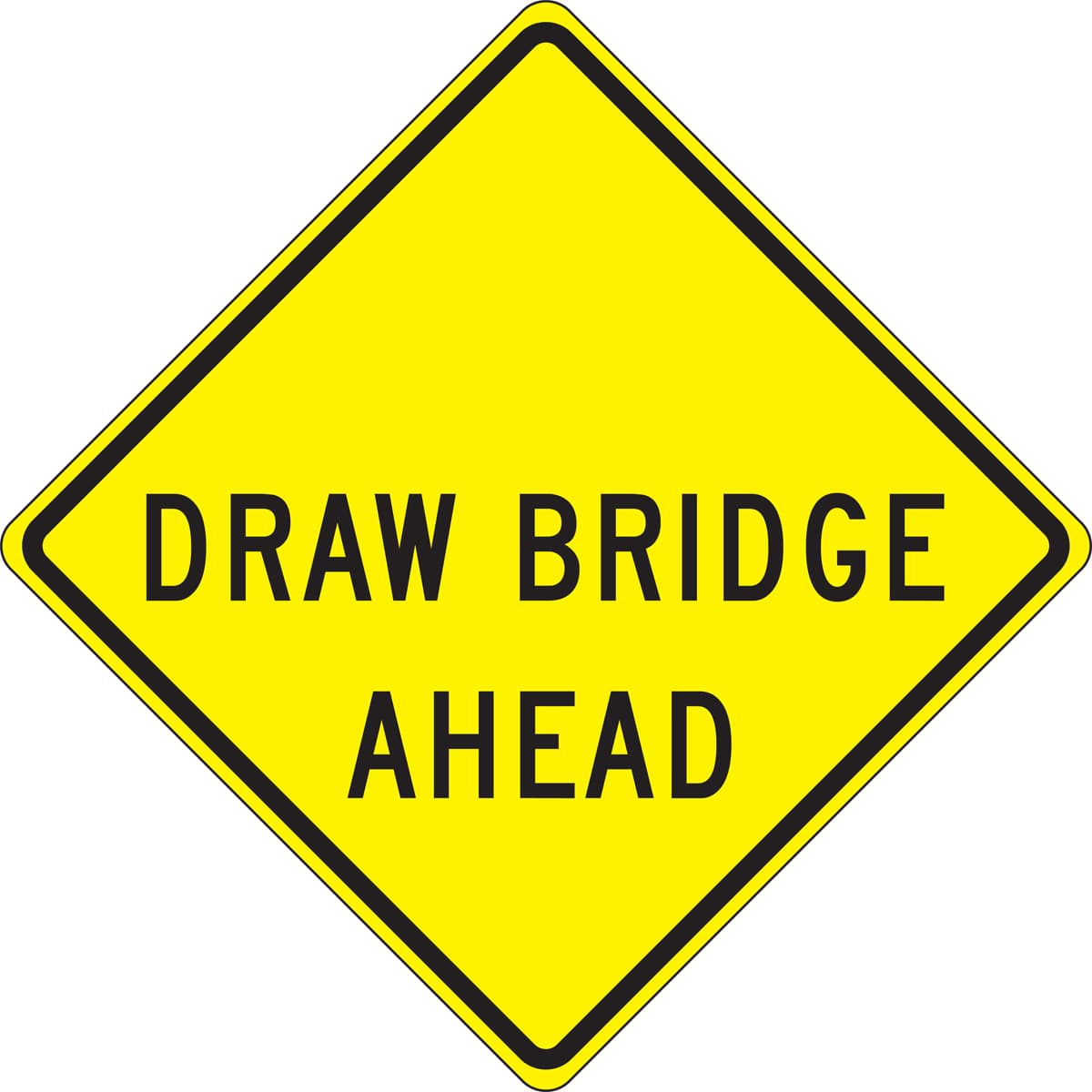
Warns that a movable bridge is ahead that may raise for boat traffic; be prepared to stop when signals are activated.
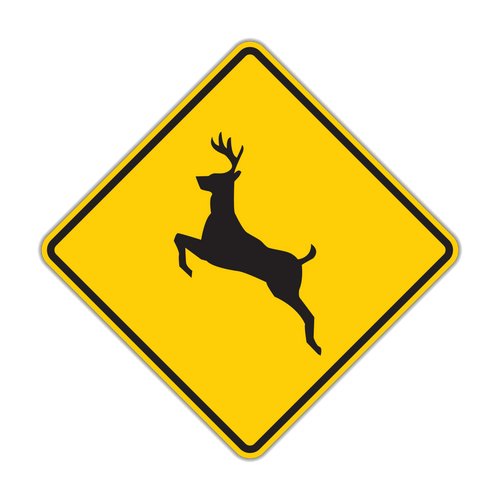
Warns that deer frequently cross the roadway; be prepared to slow or stop suddenly.
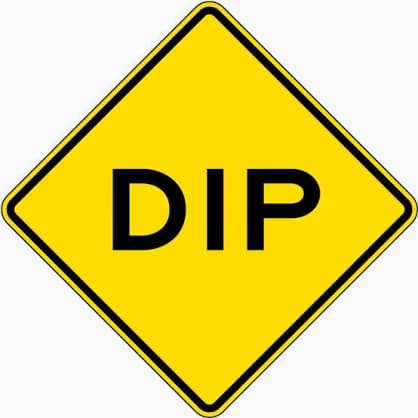
Indicates a sudden low spot or dip in the road; slow down to pass through safely.
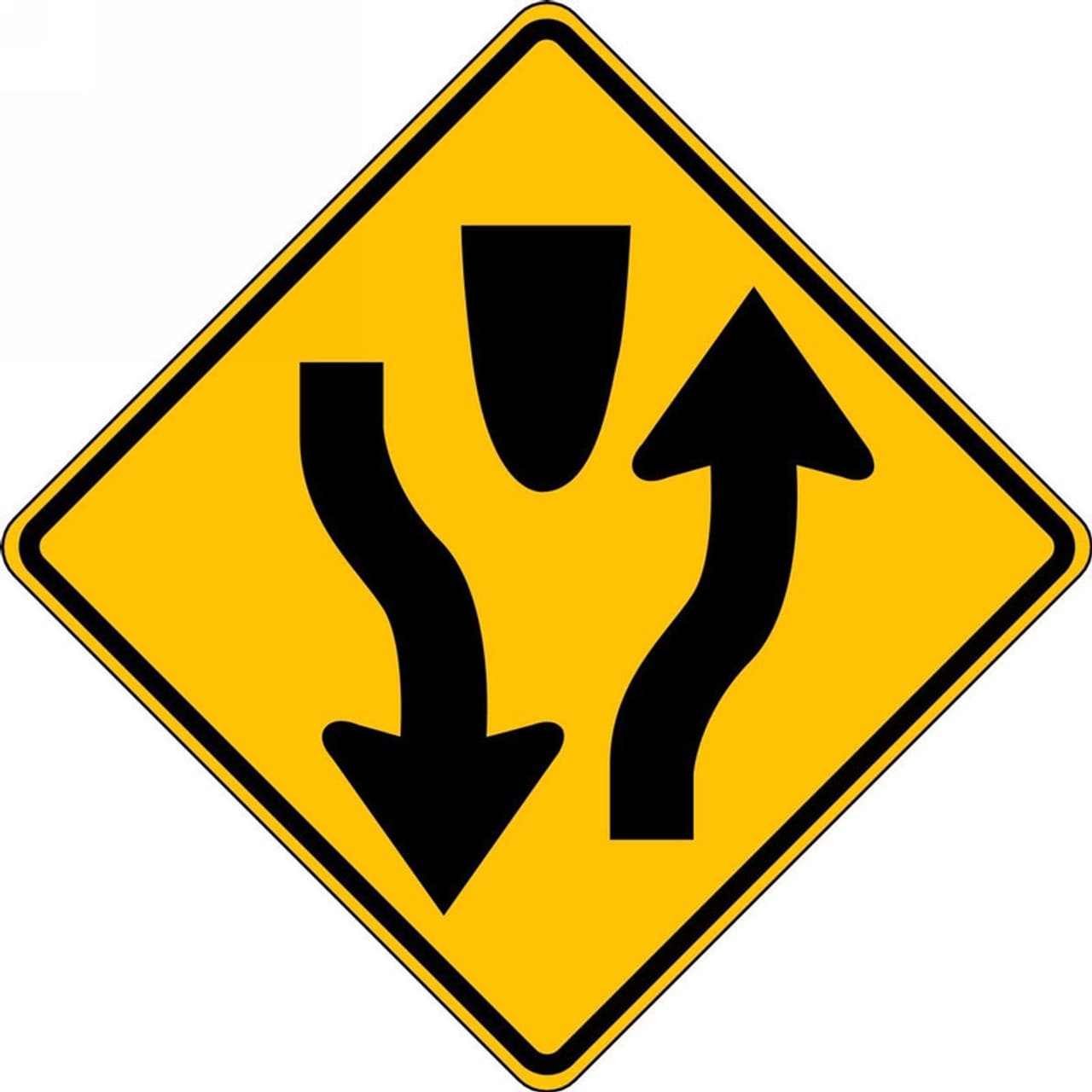
Announces the start of a divided highway with a median separating directions of travel.
Most commonly tested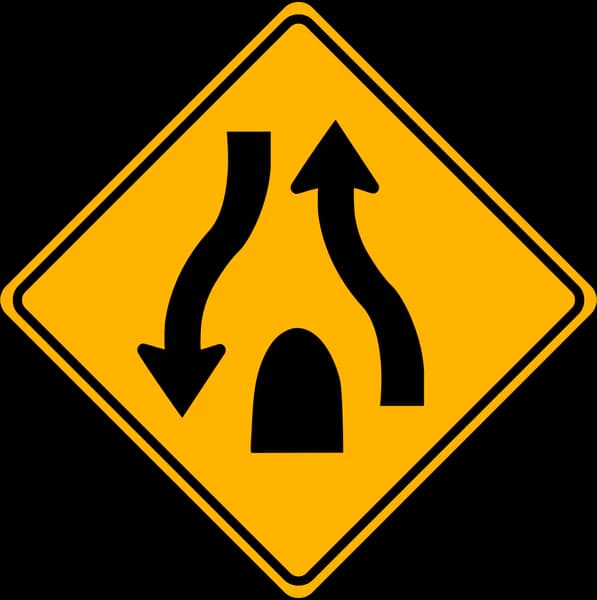
Warns that the median will end and opposing traffic will be next to you again.
Most commonly tested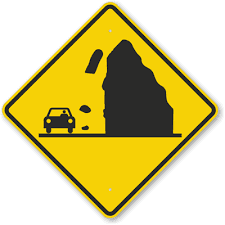
Alerts to areas where rocks may fall onto the roadway from adjacent slopes or cliffs.
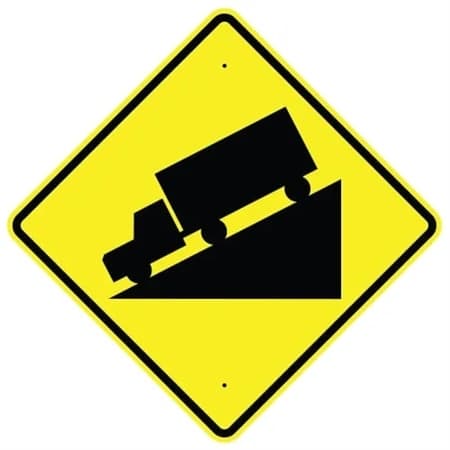
Alerts to a steep downhill grade where braking distances increase, especially for heavy vehicles.
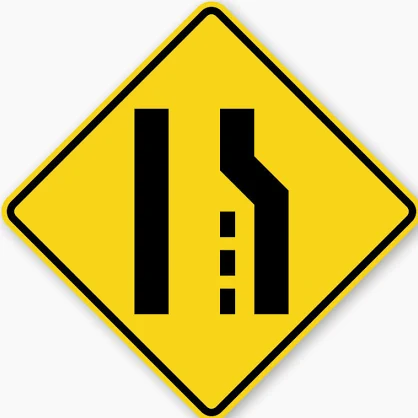
Indicates that a lane will end soon; drivers in that lane must merge into the next lane.
Most commonly tested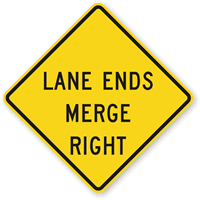
Tells drivers that their lane is ending and they must merge into the lane on the left.
Most commonly tested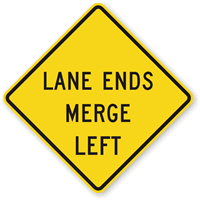
Tells drivers that their lane is ending and they must merge into the lane on the right.
Most commonly tested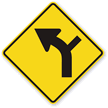
Warns of a left curve in the road with a side road entering or leaving near the curve.
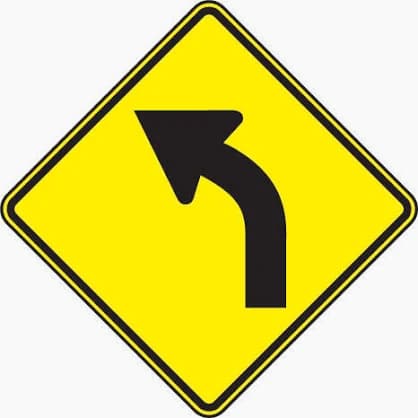
Indicates a gradual left curve ahead; reduce speed as needed.
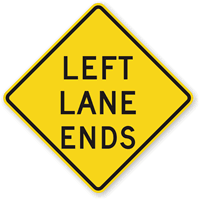
Alerts that the left-most lane will end; drivers in that lane must merge right.
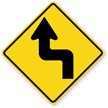
Shows a sharp turn followed by a reverse turn to the opposite side, starting to the left.
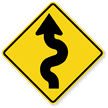
Indicates a series of curves ahead beginning with a curve to the left.
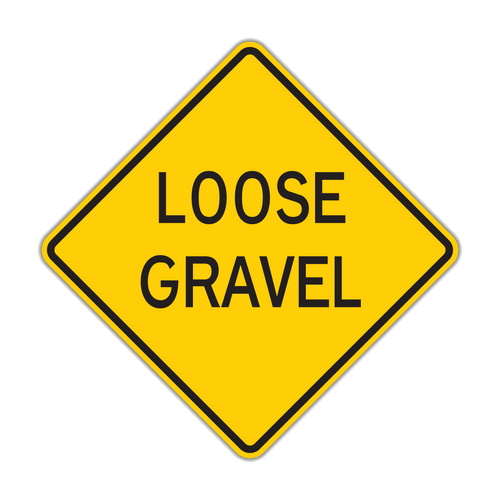
Warns of loose stones on the road surface that can reduce traction and cause flying debris.
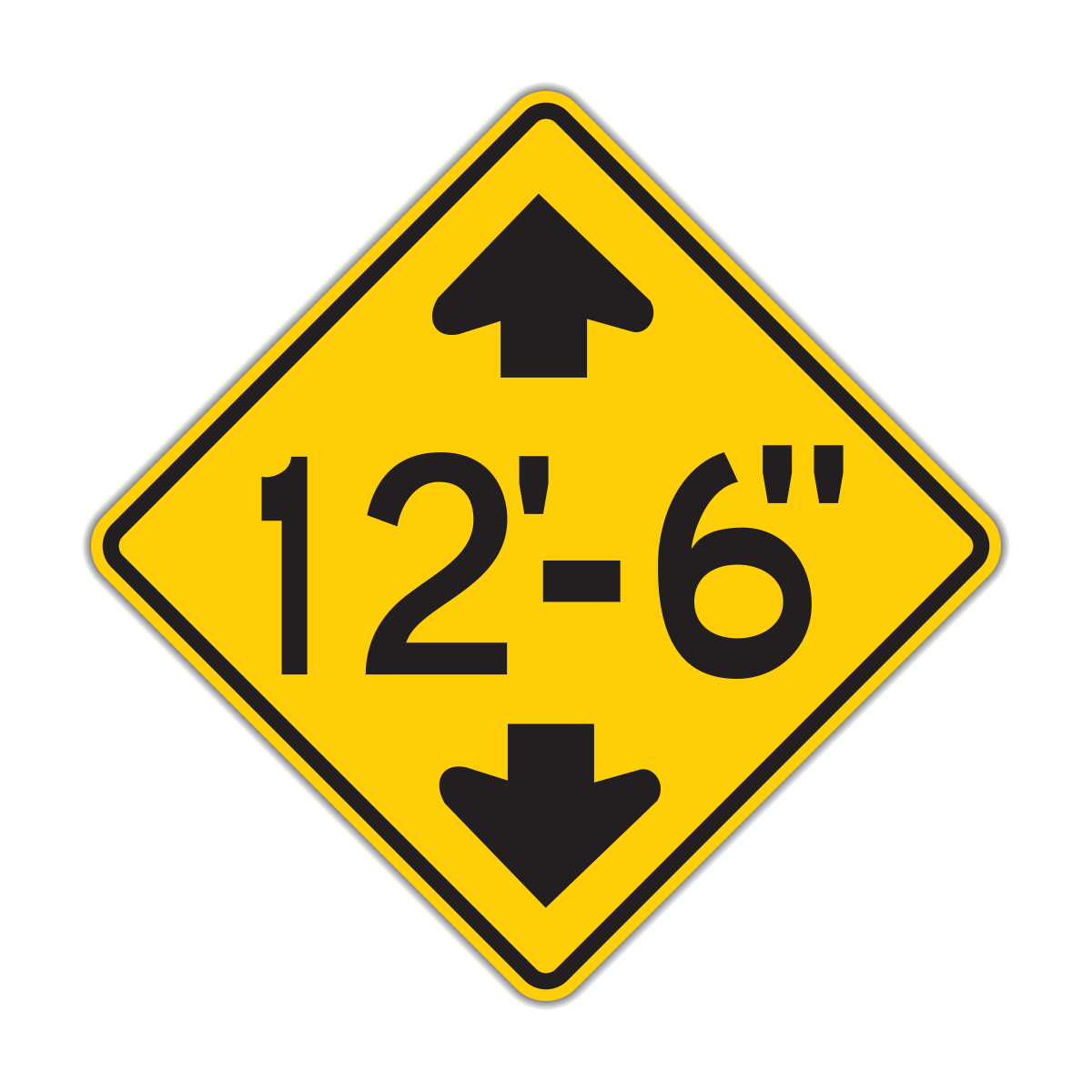
Indicates that an overpass or structure ahead has limited vertical clearance for tall vehicles.
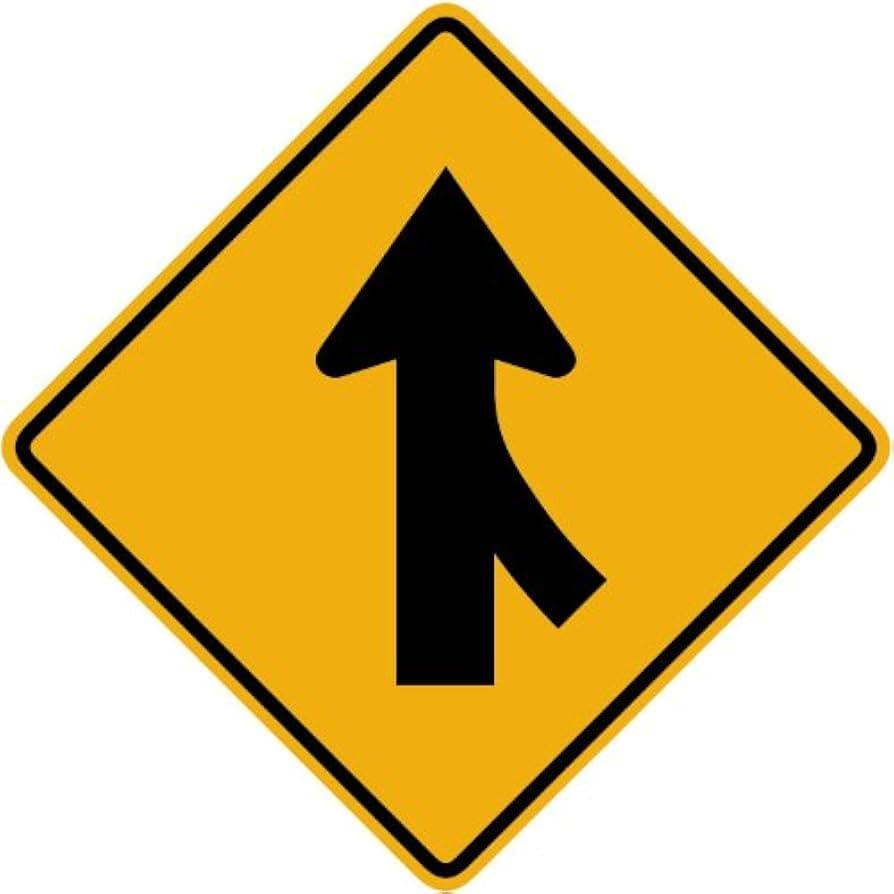
Alerts that traffic from another lane or road will merge into your lane; adjust speed and spacing.
Most commonly tested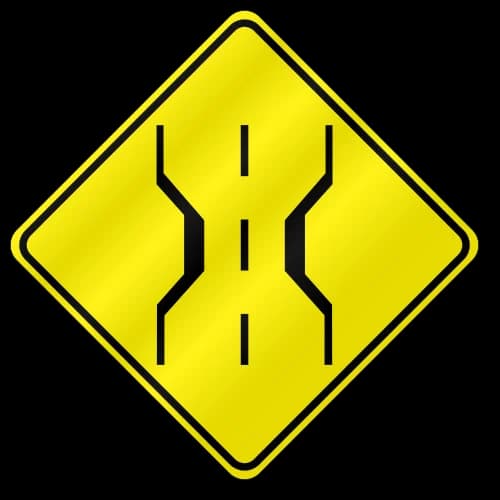
Warns that a bridge with limited width is ahead; oncoming vehicles may be close.
Most commonly tested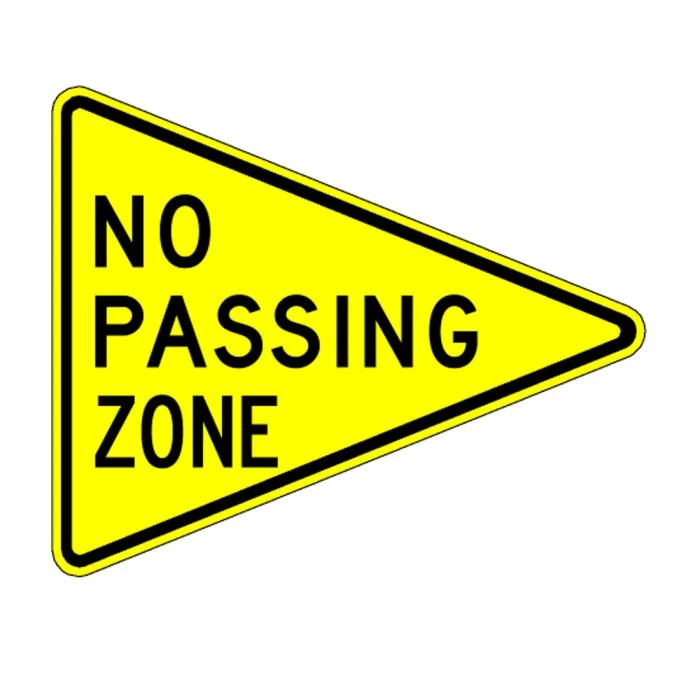
A pennant-shaped warning that passing is unsafe on this stretch of road.
Most commonly tested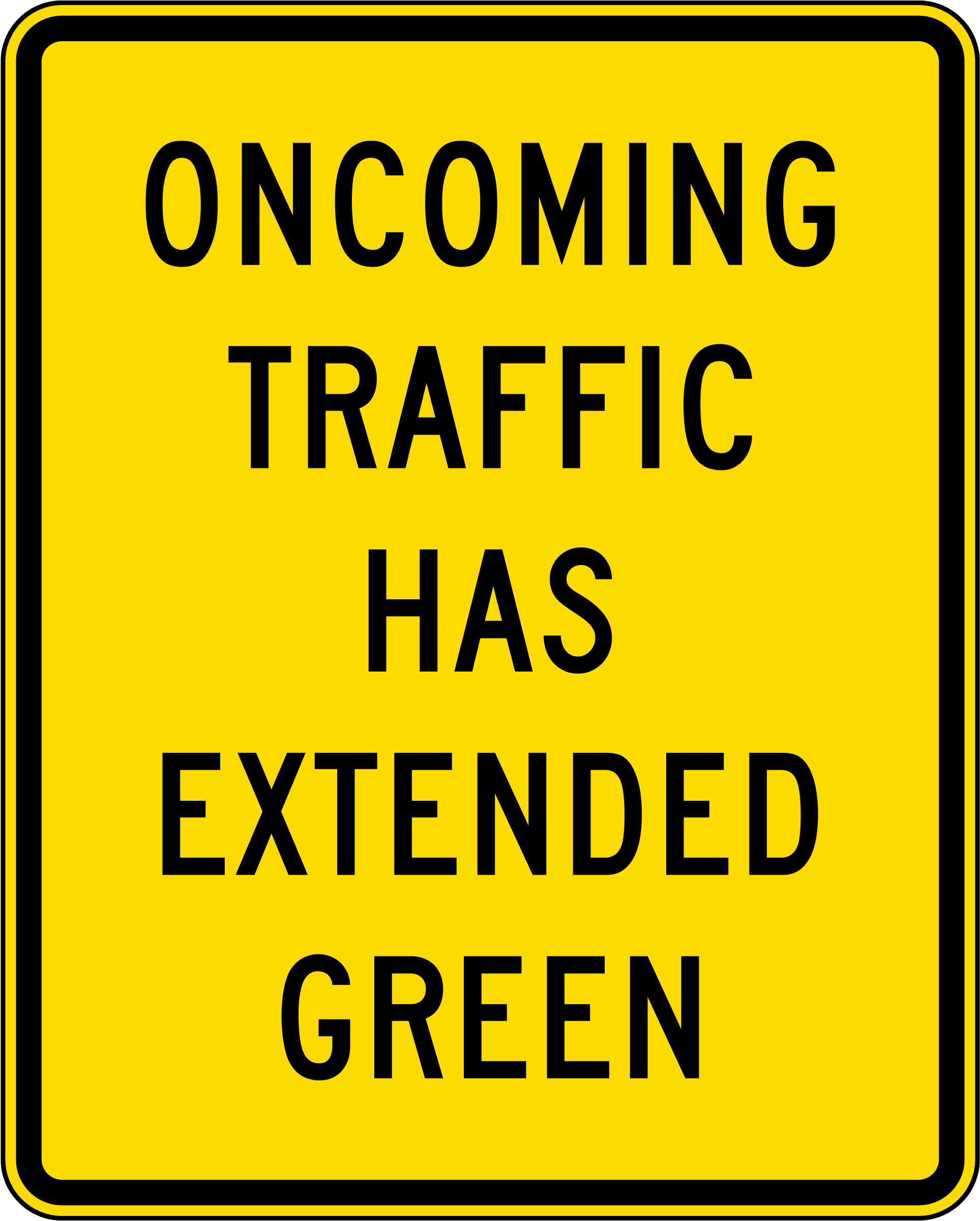
Indicates opposing traffic may keep a green light longer than your direction; watch before turning.
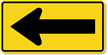
Directs traffic to proceed only in the indicated leftward direction at an island or obstruction.
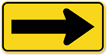
Directs traffic to proceed only in the indicated rightward direction at an island or obstruction.
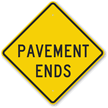
Alerts that the paved surface will soon change to gravel or unpaved roadway.
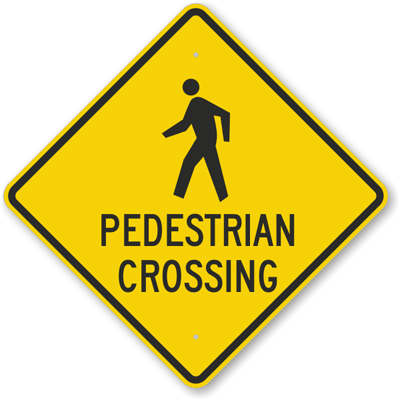
Indicates a marked crosswalk or area where pedestrians frequently cross; yield to people in the crosswalk.
Most commonly tested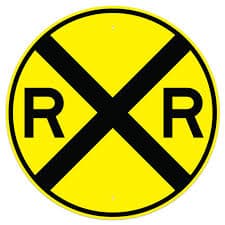
Indicates active train tracks ahead; slow down and yield to any approaching trains.
Most commonly tested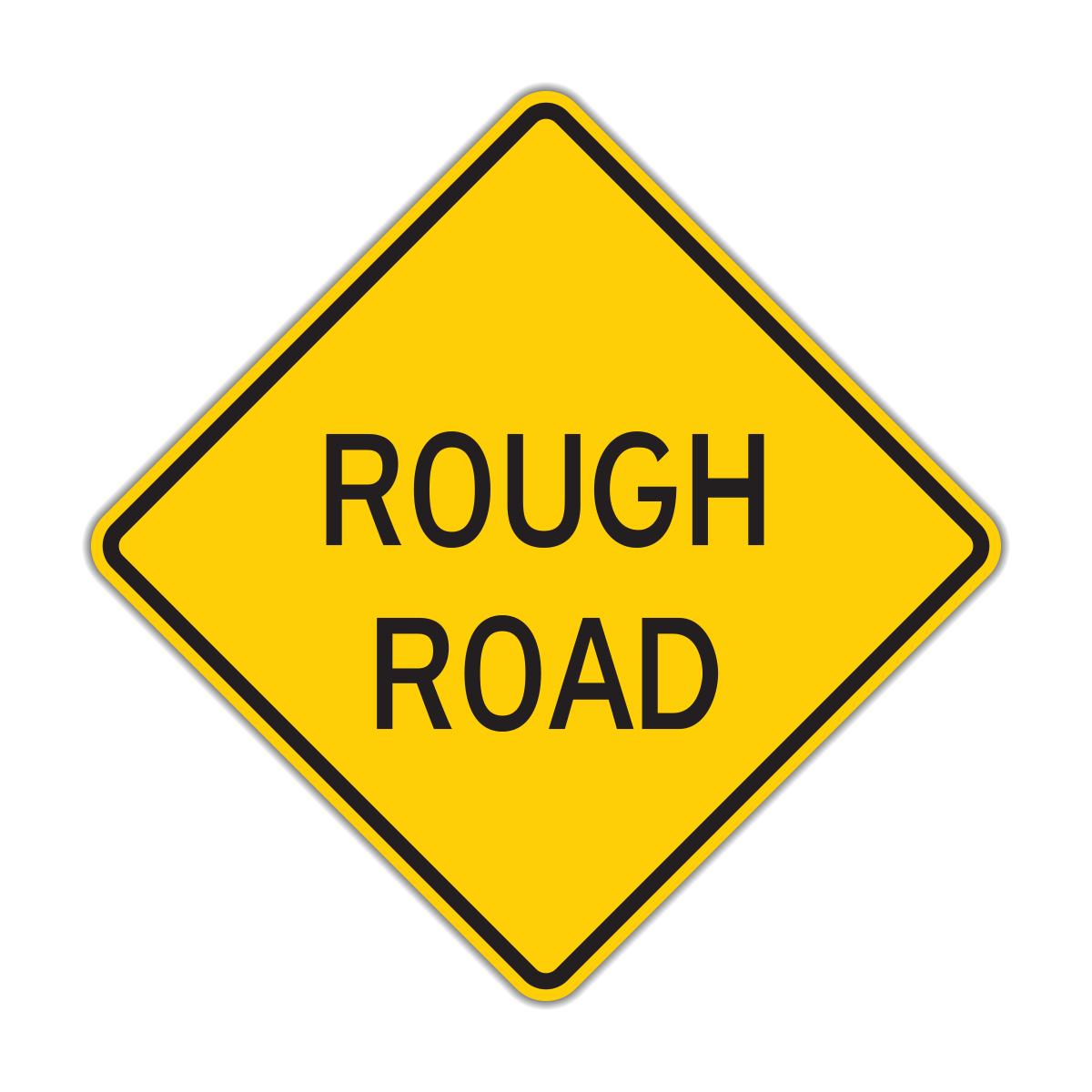
Indicates a section of roadway with an uneven or deteriorated surface; slow down to maintain control.
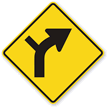
Warns of a right curve with a side road entering or leaving near the curve.
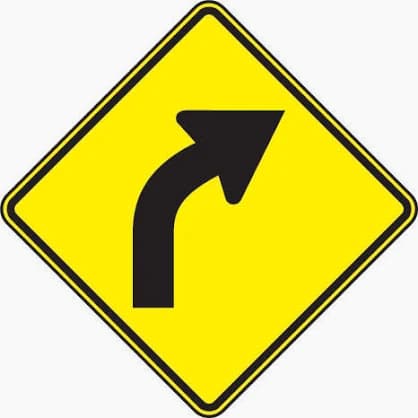
Indicates a gradual right curve ahead; reduce speed as necessary.
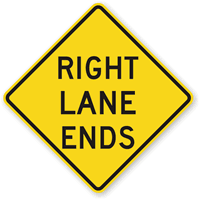
Alerts that the right lane will end and traffic must merge left.
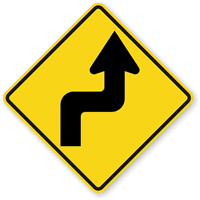
Shows a sharp turn followed by a reverse turn, starting to the right.
Indicates a series of curves ahead beginning with a curve to the right.
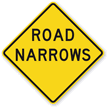
Warns that the roadway will become narrower ahead, leaving less room for vehicles.
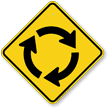
Indicates a circular intersection where entering drivers must yield to traffic already in the roundabout.
Most commonly tested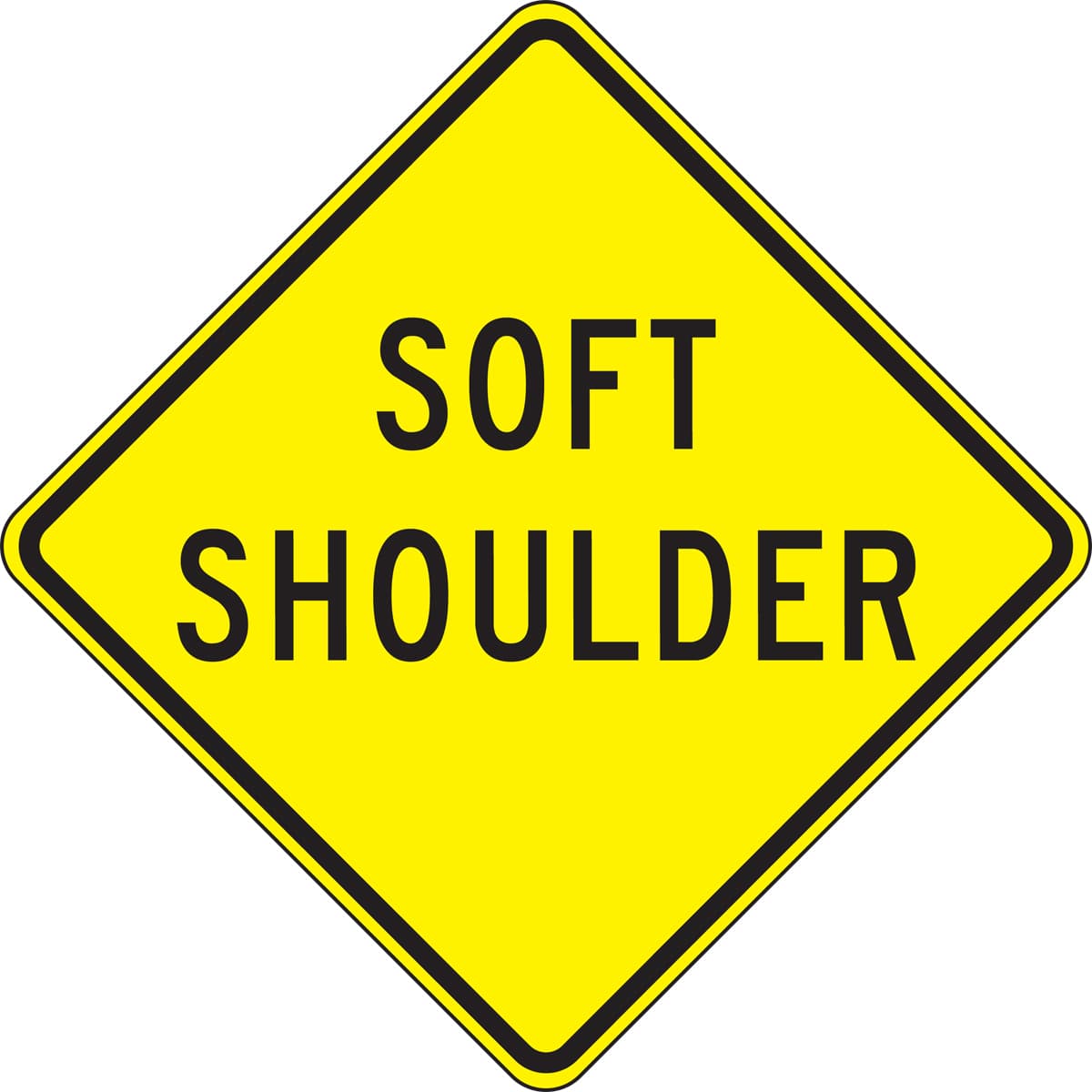
Warns that the unpaved shoulder is soft or unstable; avoid driving on it and re-enter pavement carefully if wheels leave the roadway.
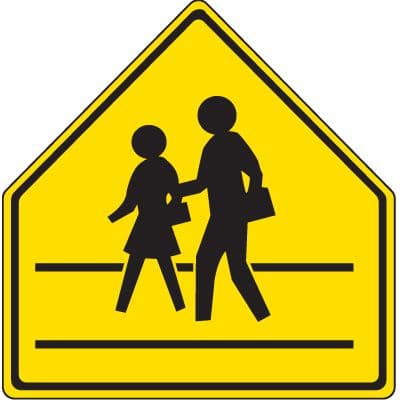
Alerts that a school crosswalk is ahead; expect children crossing and be ready to stop.
Most commonly tested
Marks the approach to a school area where lower speeds and extra caution are required.
Most commonly tested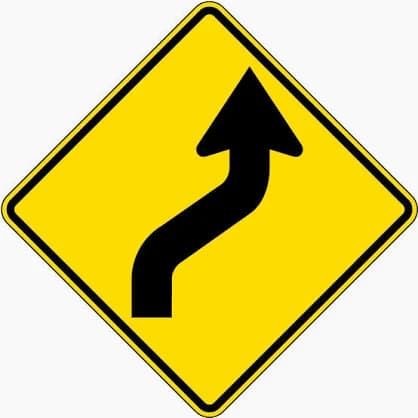
Warns of consecutive curves first to the left, then to the right.
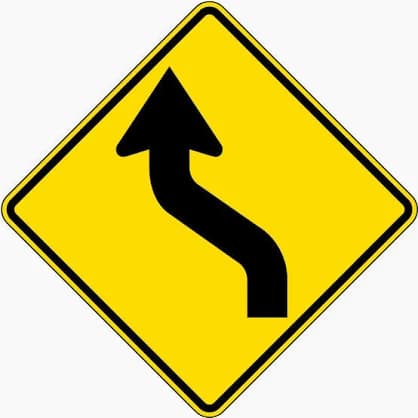
Warns of consecutive curves first to the right, then to the left.
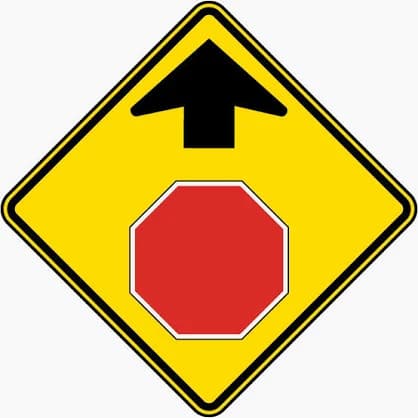
Warns that a stop sign is coming up where it may not be visible in time to react; begin slowing down.
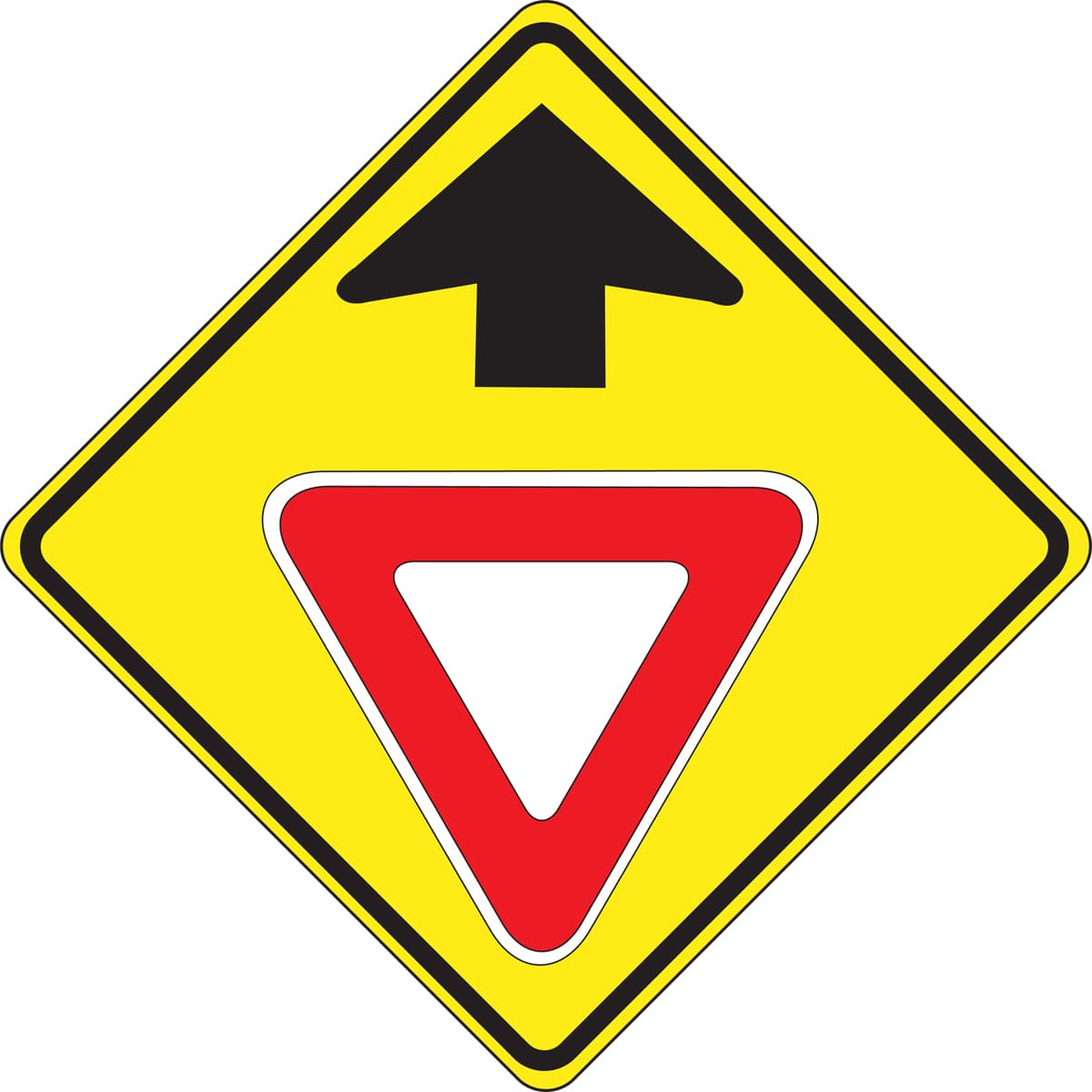
Alerts drivers that a yield sign is ahead so they can prepare to slow and give the right of way.
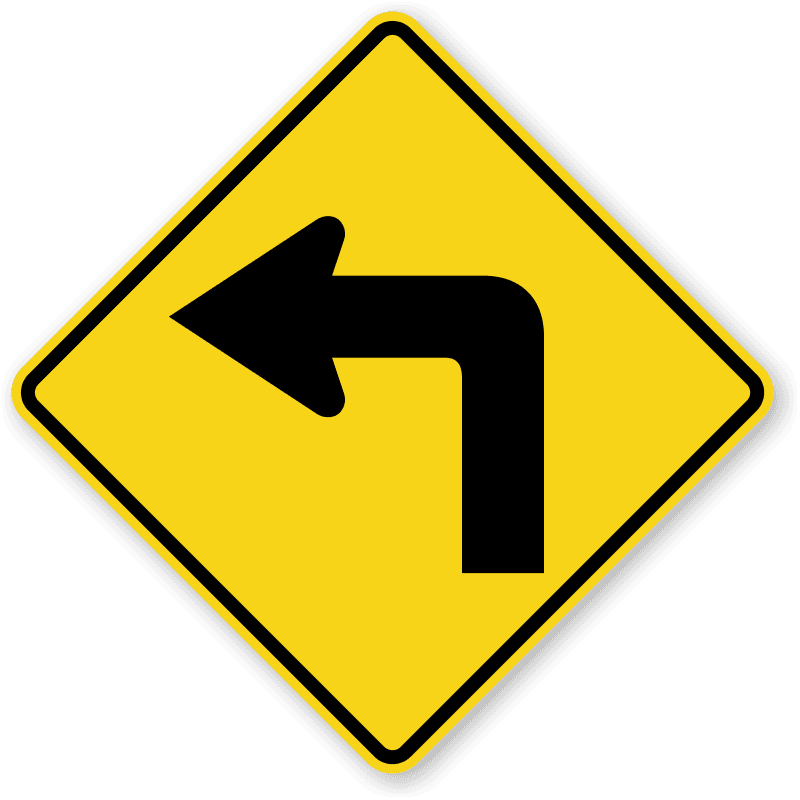
Indicates a sharp left turn where a significant speed reduction is needed.
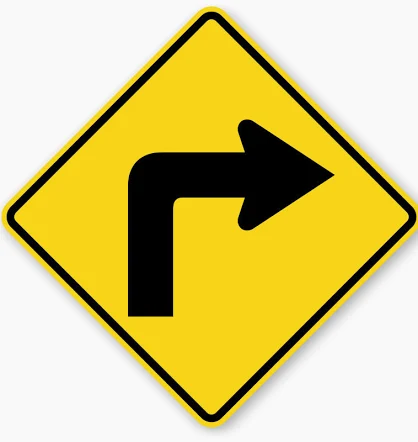
Indicates a sharp right turn where a significant speed reduction is needed.
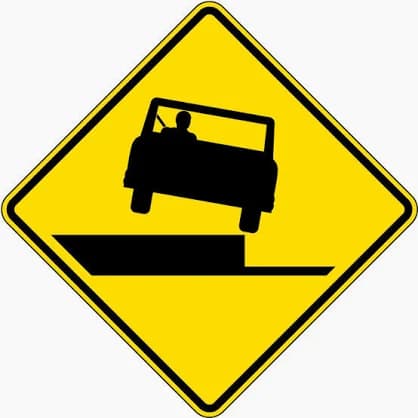
Warns of a steep edge between the pavement and shoulder that can be hazardous if wheels leave the roadway.
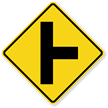
Indicates a side road entering the main road; traffic may be entering or exiting there.
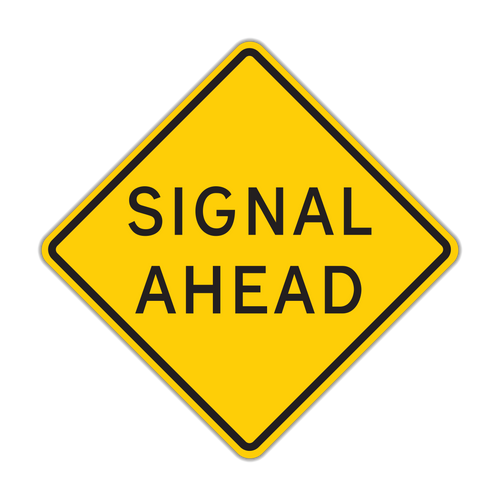
Alerts that a traffic signal is coming up where it may not be easily visible in time.
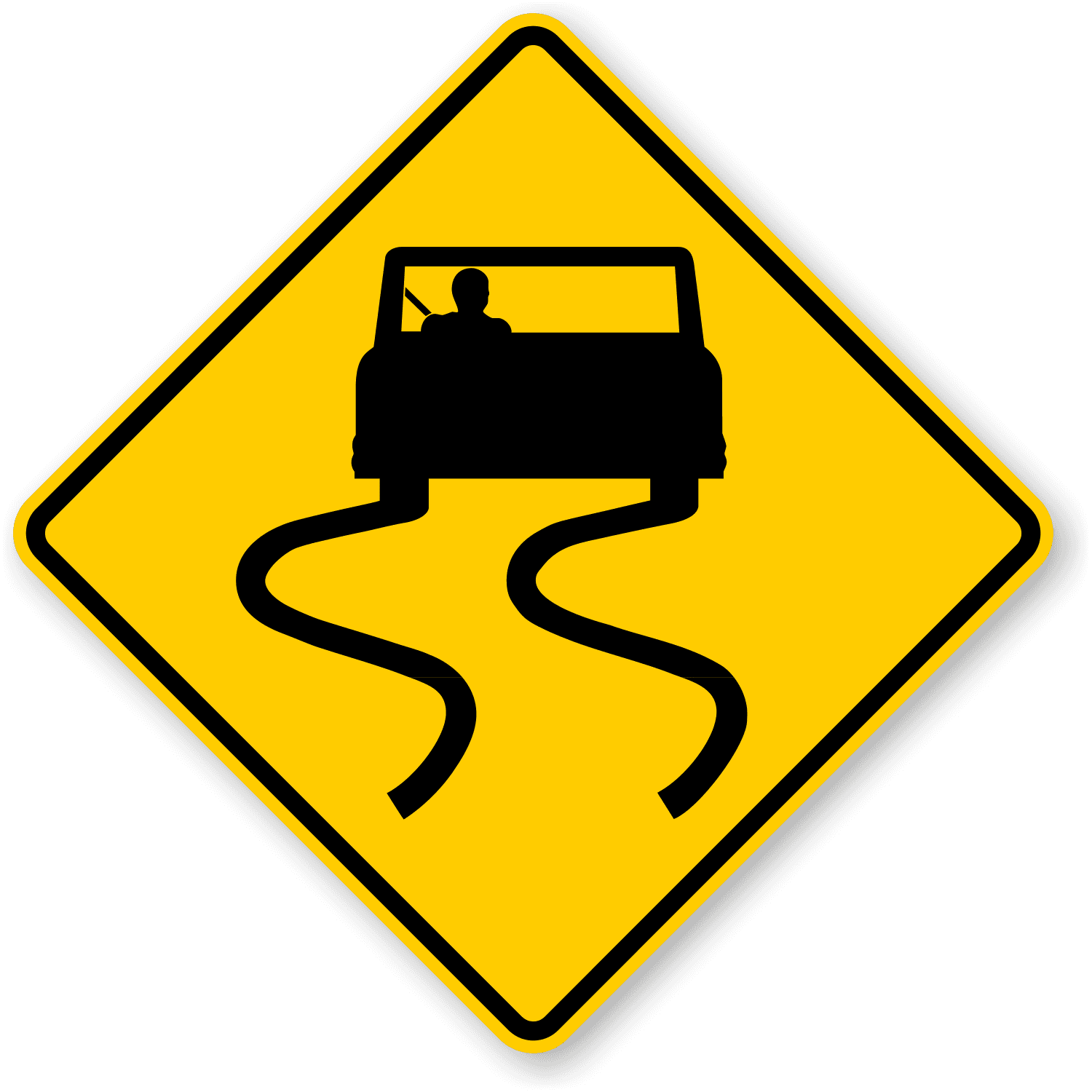
Warns that the roadway becomes especially slick in wet conditions; avoid sudden turns or braking.
Most commonly tested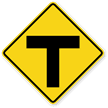
Indicates that the road you are on will end at a T-shaped intersection; you must turn left or right.
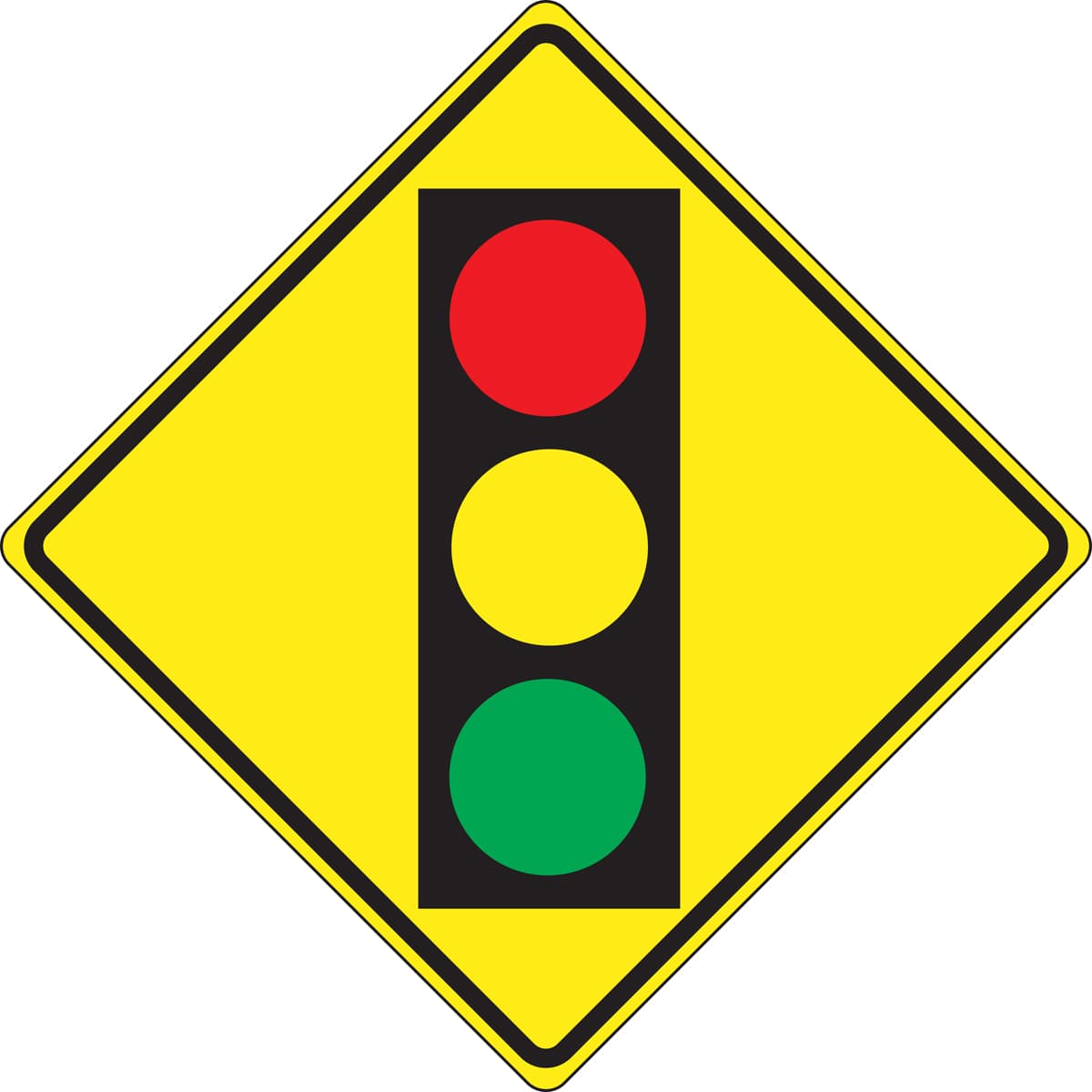
Notifies drivers of an upcoming traffic light so they can prepare to slow or stop.
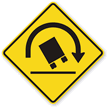
Warns of a curve or condition where high-profile vehicles are at increased risk of rolling over.
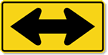
Shows that traffic can proceed in two opposite directions from this point, usually after a median ends.
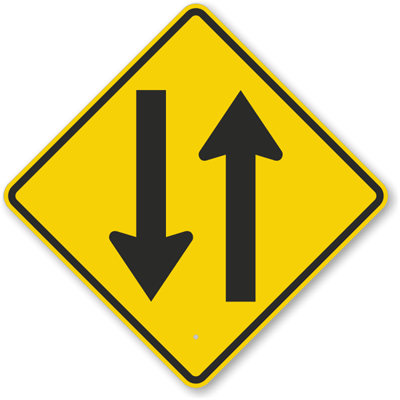
Indicates the start or return of two-way traffic after a divided or one-way section.
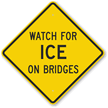
Alerts that bridges may freeze before the roadway; surfaces can be icy even when roads are clear.
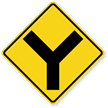
Warns that the road ahead splits into two branches forming a Y-shaped intersection.
Work Zone Signs
Alabama work zone and construction signs for the permit exam.
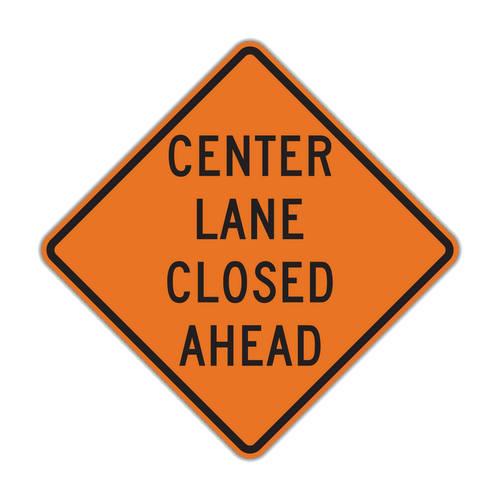
Announces that the center lane will be closed in a work zone; merge out of that lane early.
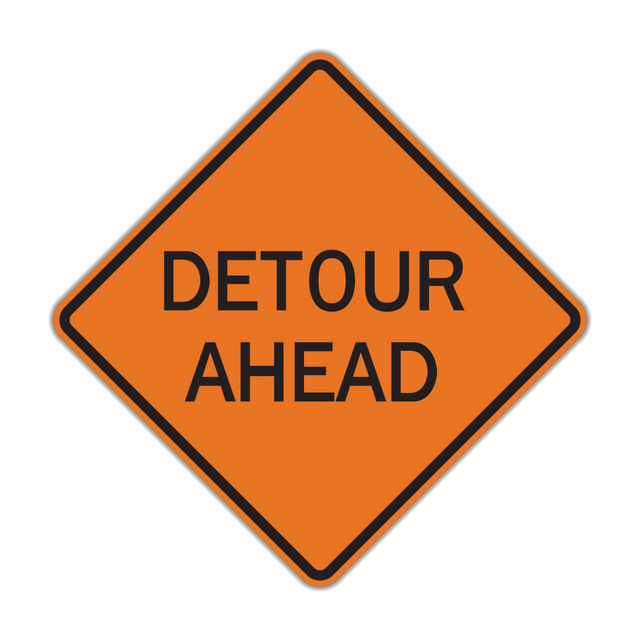
Indicates normal traffic is diverted from its usual route; follow marked detour signs.
Most commonly tested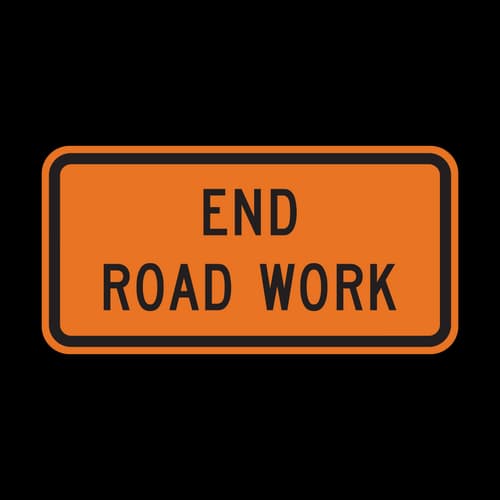
Marks where construction has ended and normal road rules and speed limits resume.
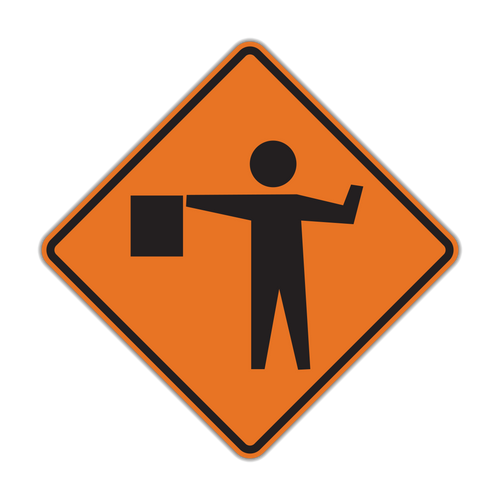
Warns that a flagger is directing traffic in the work zone; be prepared to stop and follow signals.
Most commonly tested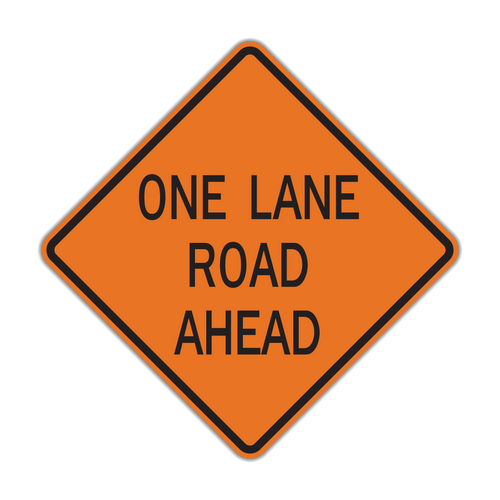
Alerts that traffic will share a single lane through the work area, often alternating directions.
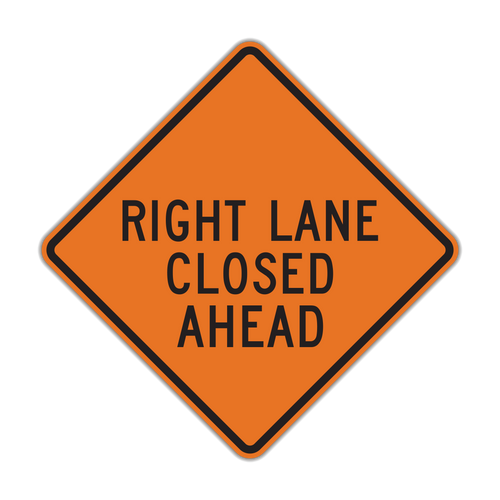
Indicates the right lane will be closed in a work zone; merge safely into an open lane.
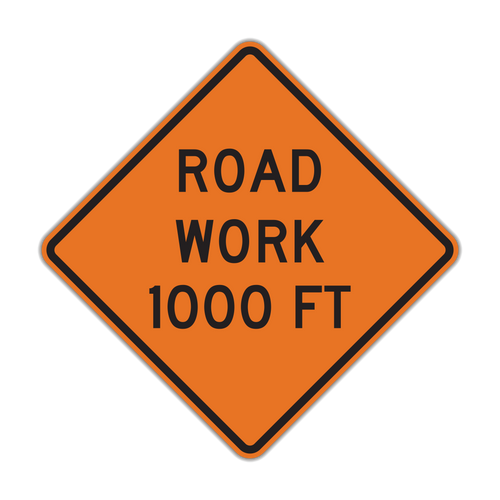
General warning that construction or maintenance is ahead; expect slowed or shifted traffic.
Most commonly tested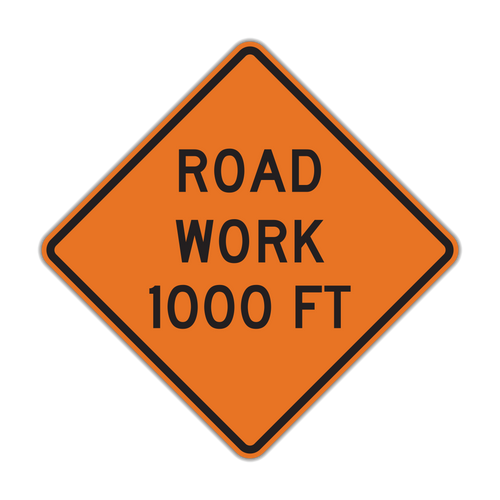
Used within a work zone to mark the active construction area and remind drivers to use extra caution.
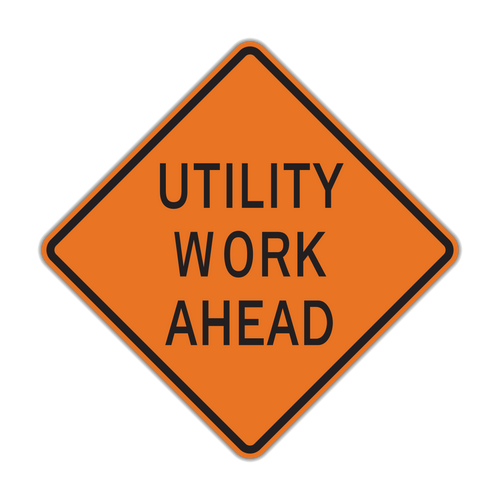
Alerts that utility crews are working near or on the roadway; watch for workers and equipment.
Most commonly tested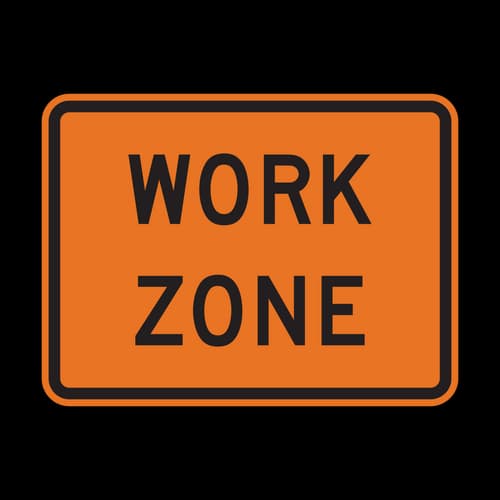
Marks the boundaries of a road work area where reduced speeds, fines, and heightened caution apply.
Most commonly testedDone studying the signs?
Take the free test and see how much you can score.
Road Sign FAQs
How many road sign questions are on the Alabama permit test?+
The Alabama permit test includes approximately 6-8 road sign questions, making up around 15-20% of your total score. Knowing your road signs well can significantly improve your chances of passing on the first try.
What do the different road sign colors mean?+
Road sign colors each have a specific meaning: red means stop or prohibition, yellow means warning or caution, green means guidance or direction, orange means construction or work zones, blue means services or information, and white means regulatory rules you must follow.
What do road sign shapes mean?+
Each road sign shape has a specific meaning: octagons mean stop, triangles mean yield, diamonds mean warning, rectangles mean regulatory or guide information, pentagons mean school zones, and circles mean railroad crossings.
What are the most commonly missed road signs on the DMV test?+
The most commonly missed road signs on DMV tests are: No Passing Zone, Divided Highway Ends, Added Lane, Yield on Green, and Low Clearance. These signs are frequently tested but often confused by first-time test takers.
Do I need to memorize road sign shapes and colors for the Alabama permit test?+
Yes. The Alabama permit test will show you road signs and ask you to identify their meaning, or describe a situation and ask which sign applies. Knowing both the shape and color of signs helps you answer even if you can't remember the exact name.
What is the difference between a warning sign and a regulatory sign?+
Regulatory signs are white and tell you rules you must follow by law — like speed limits, stop signs, and no turn signs. Warning signs are yellow and alert you to hazards or changes in road conditions ahead — like curves, crossings, and merges. Disobeying a regulatory sign can result in a fine or citation.
Are road signs the same in every state?+
Yes. Road signs in the United States are standardized under the Manual on Uniform Traffic Control Devices (MUTCD), which means the same signs are used in every state. Learning road signs for your Alabama permit test means you will recognize them anywhere in the country.